


Güliz Kayahan
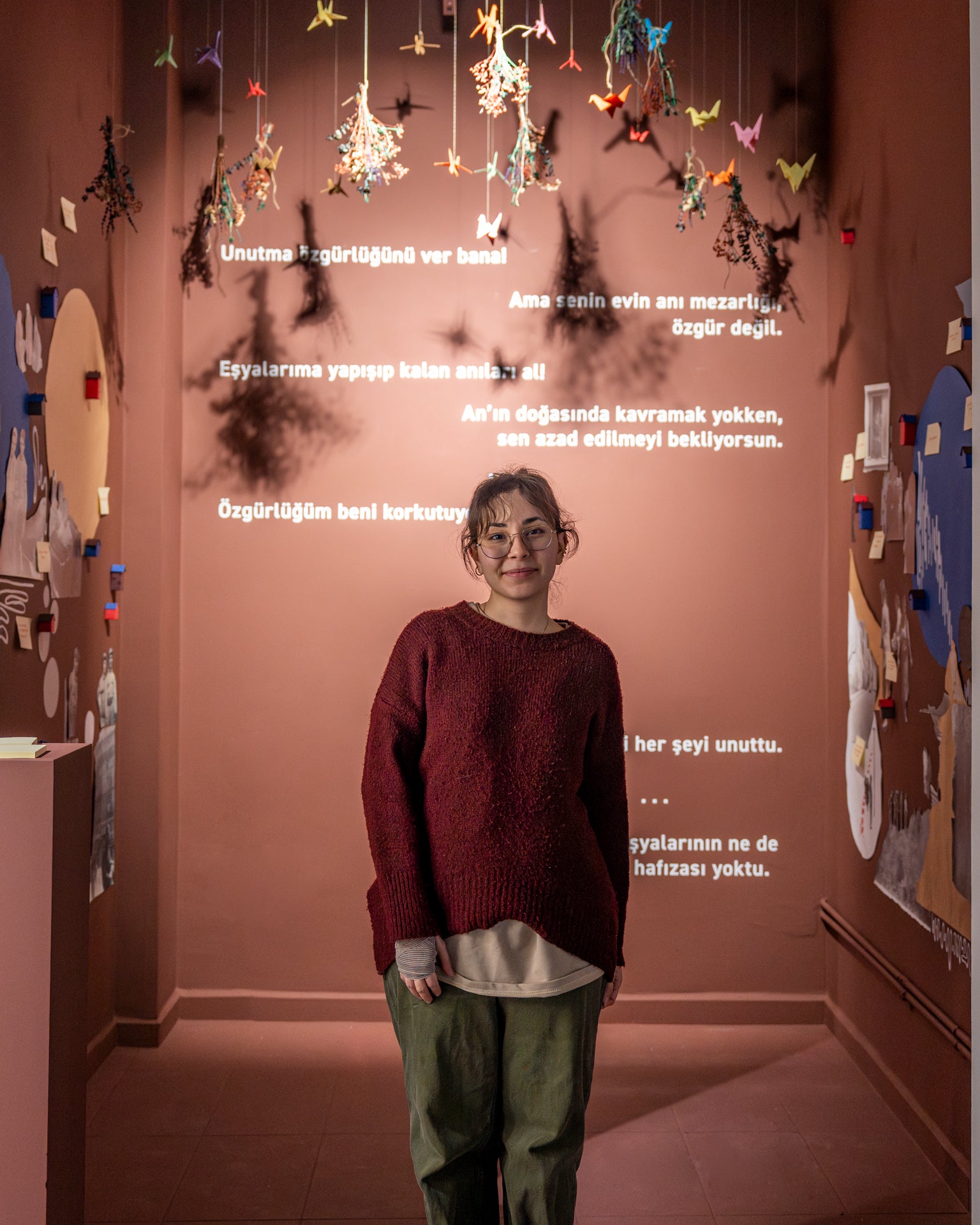
Güliz Kayahan (d. 2001, Yalova), Yeditepe Üniversitesi Plastik Sanatlar ve Resim ile Felsefe bölümlerinden mezun oldu; Sanat ve Kültür Yönetimi alanında yandalını tamamladı. Çeşitli grup sergilerinde yer alan sanatçı, kolaj, enstalasyon, video ve resim gibi farklı medyumlarla çalışmaktadır. Hafıza, aidiyet, yalnızlık ve zaman kavramları etrafında şekillenen pratiği genelde bir soru ile başlar. Bireysel deneyimlerden yola çıkarak izleyici için toplumsal ve duygusal bir diyalog alanı açmayı amaçlar.
Güliz Kayahan (b. 2001, Yalova) graduated from Yeditepe University with degrees in Fine Arts and Painting and Philosophy, and completed a minor in Art and Cultural Management. The artist has participated in various group exhibitions and works with multiple mediums, including collage, installation, video, and painting. Shaped around themes of memory, belonging, loneliness, and time, her practice often begins with a question. Drawing on individual experiences, she aims to create a space for social and emotional dialogue for the viewer.
Featured Artwork
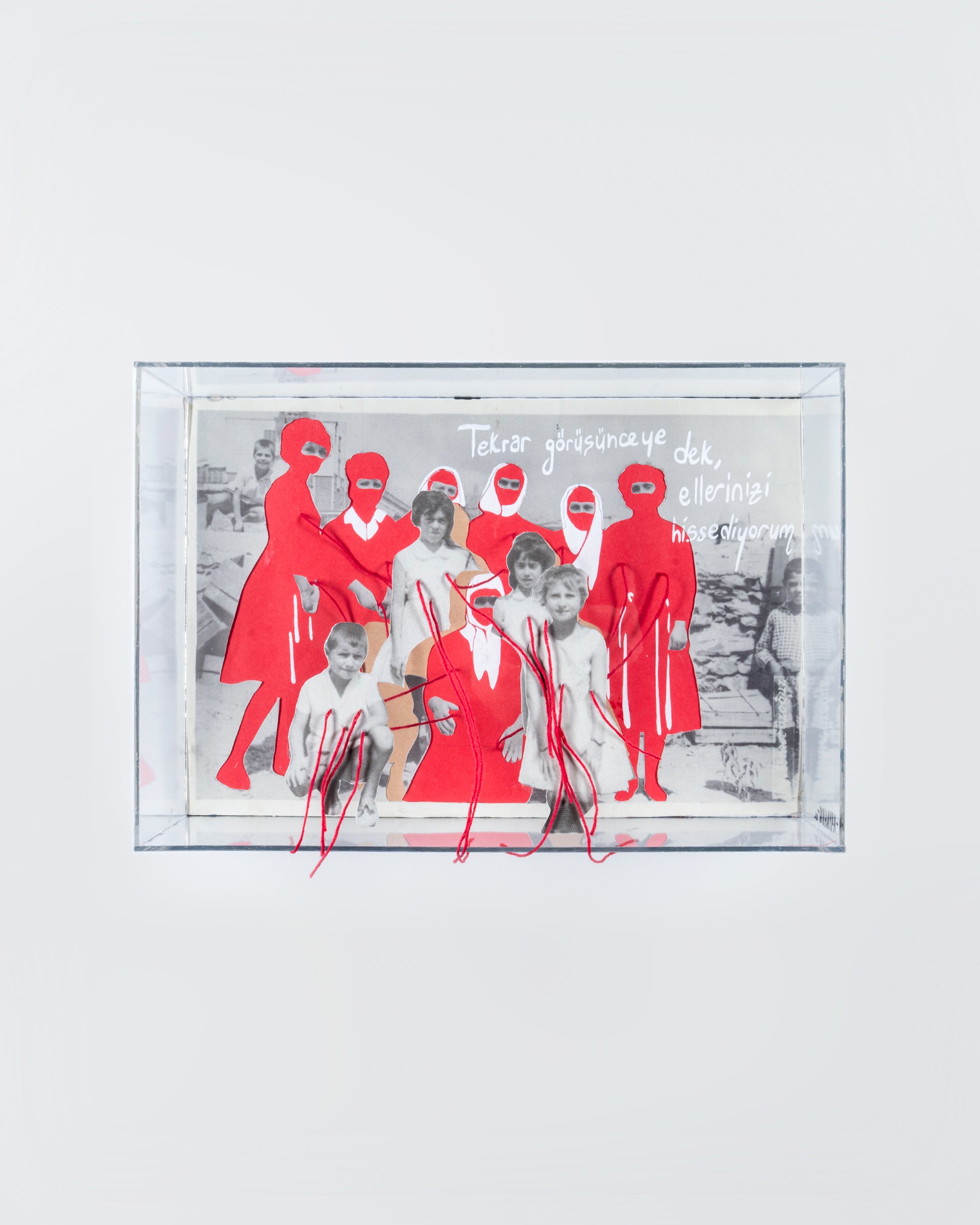
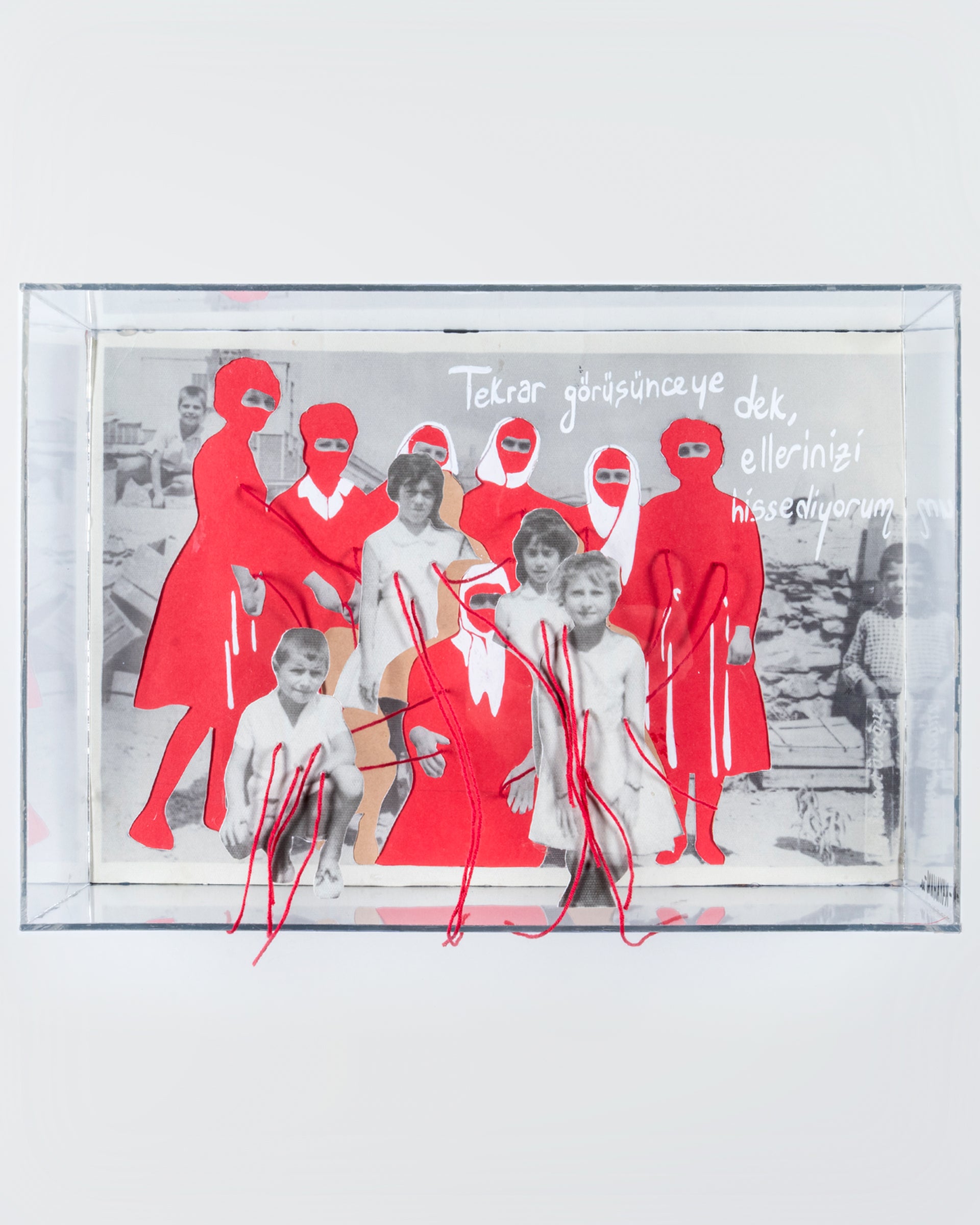
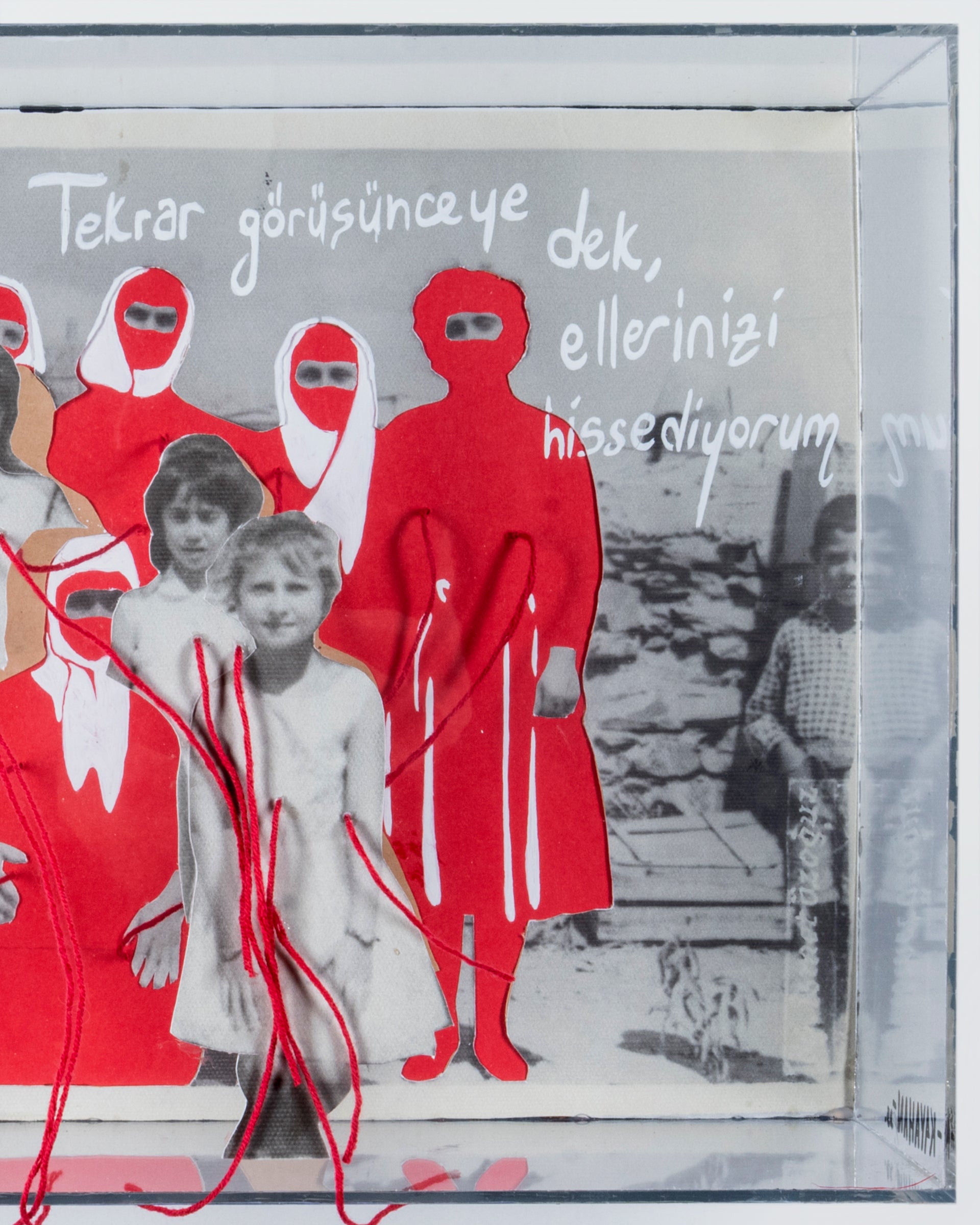
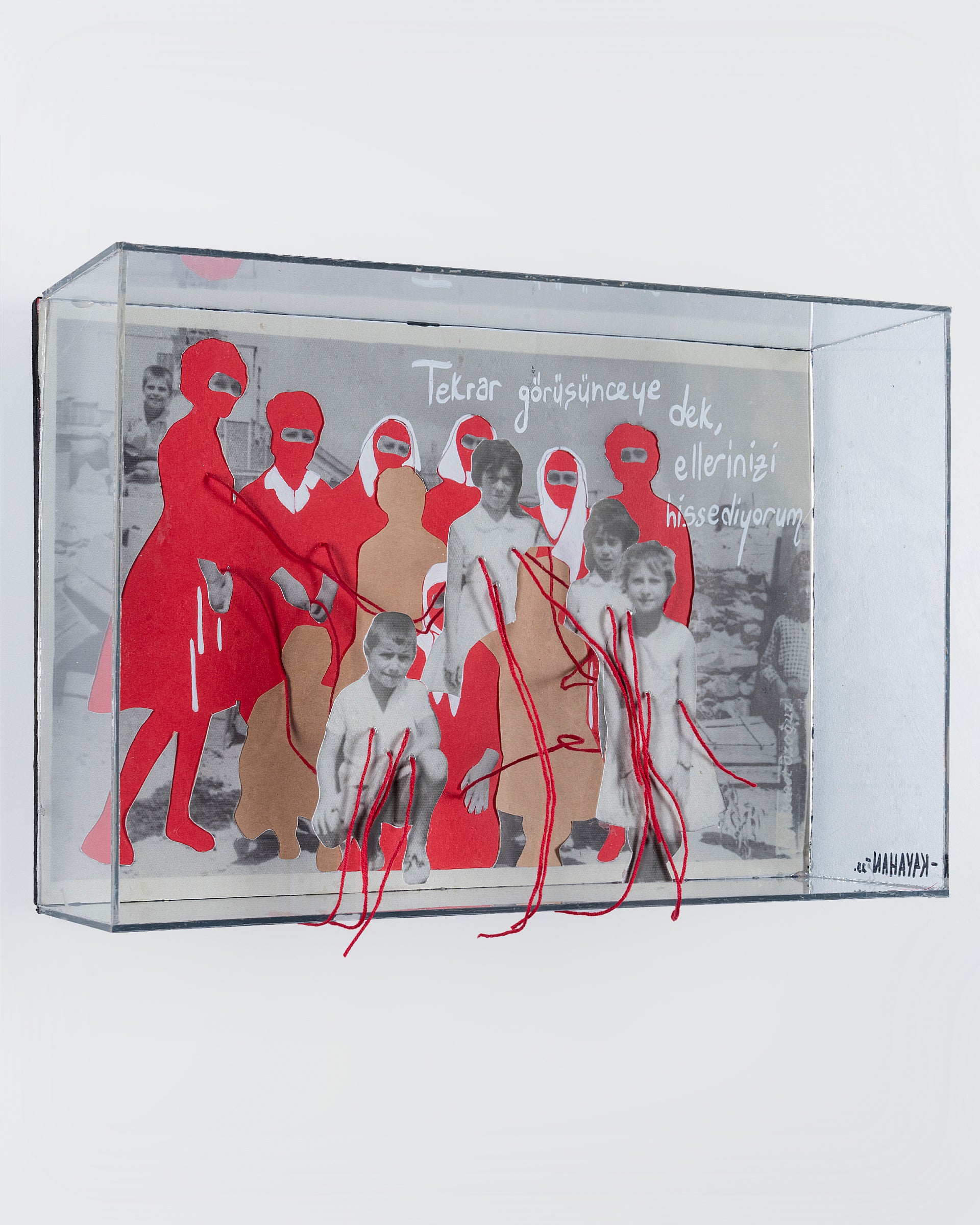
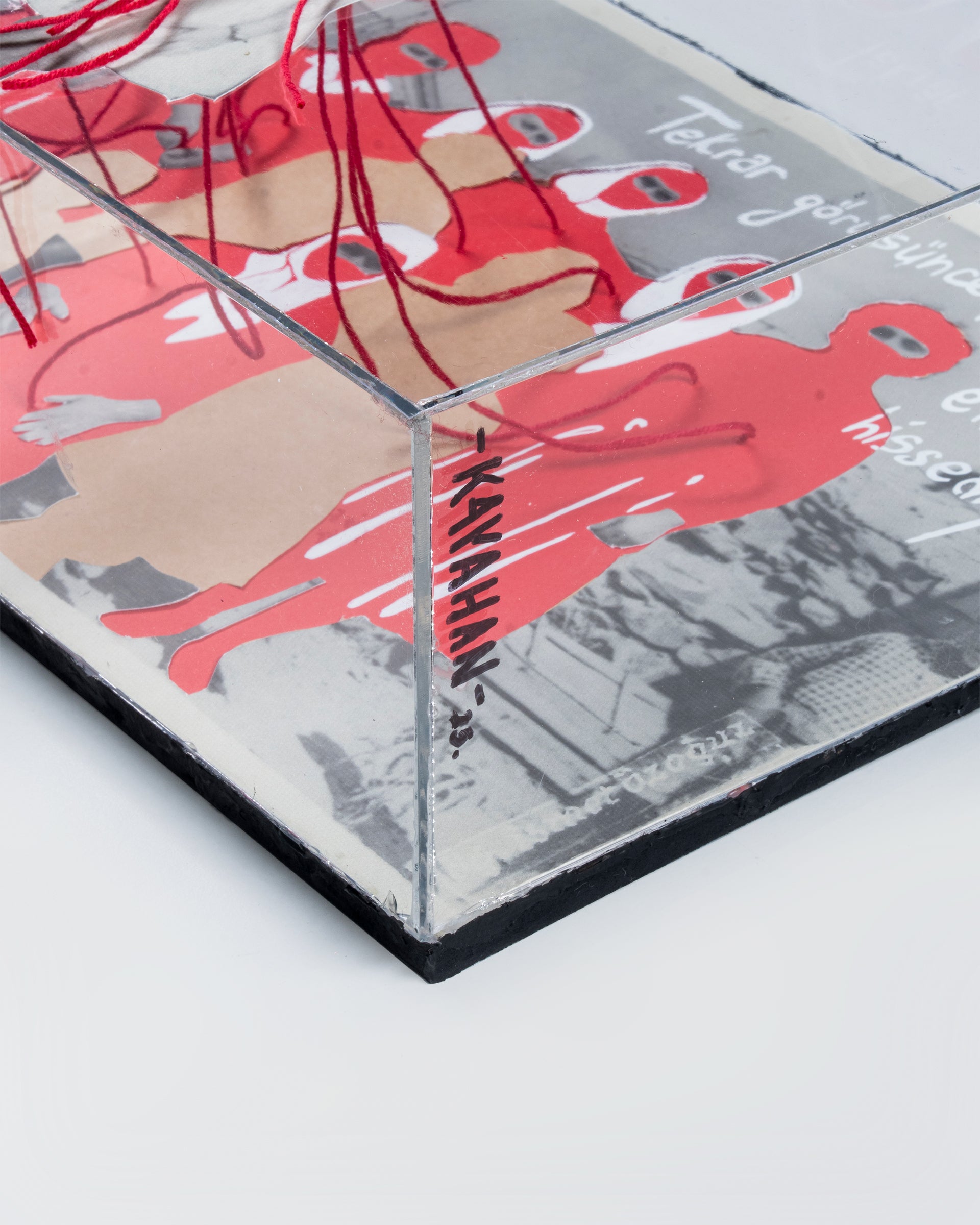
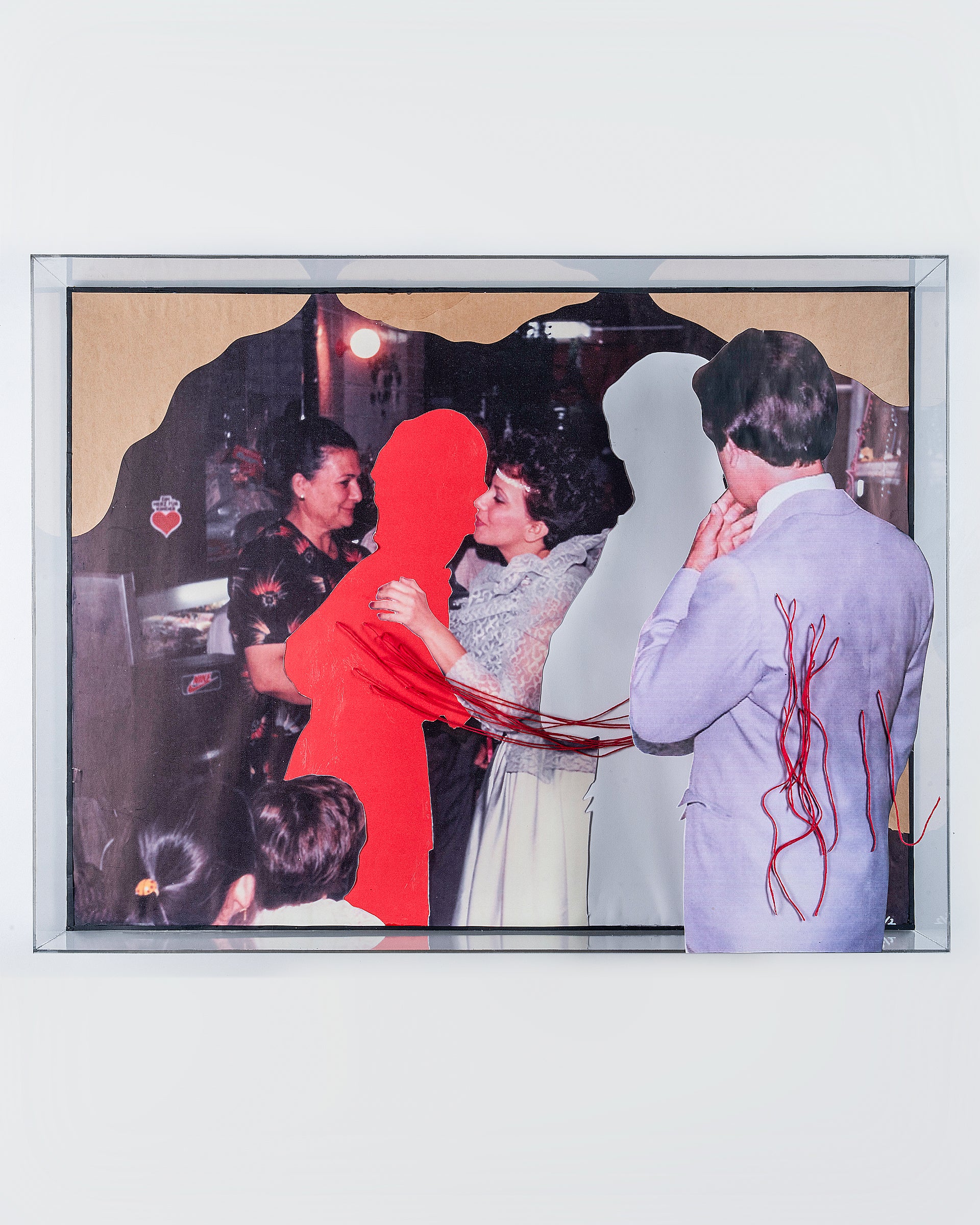
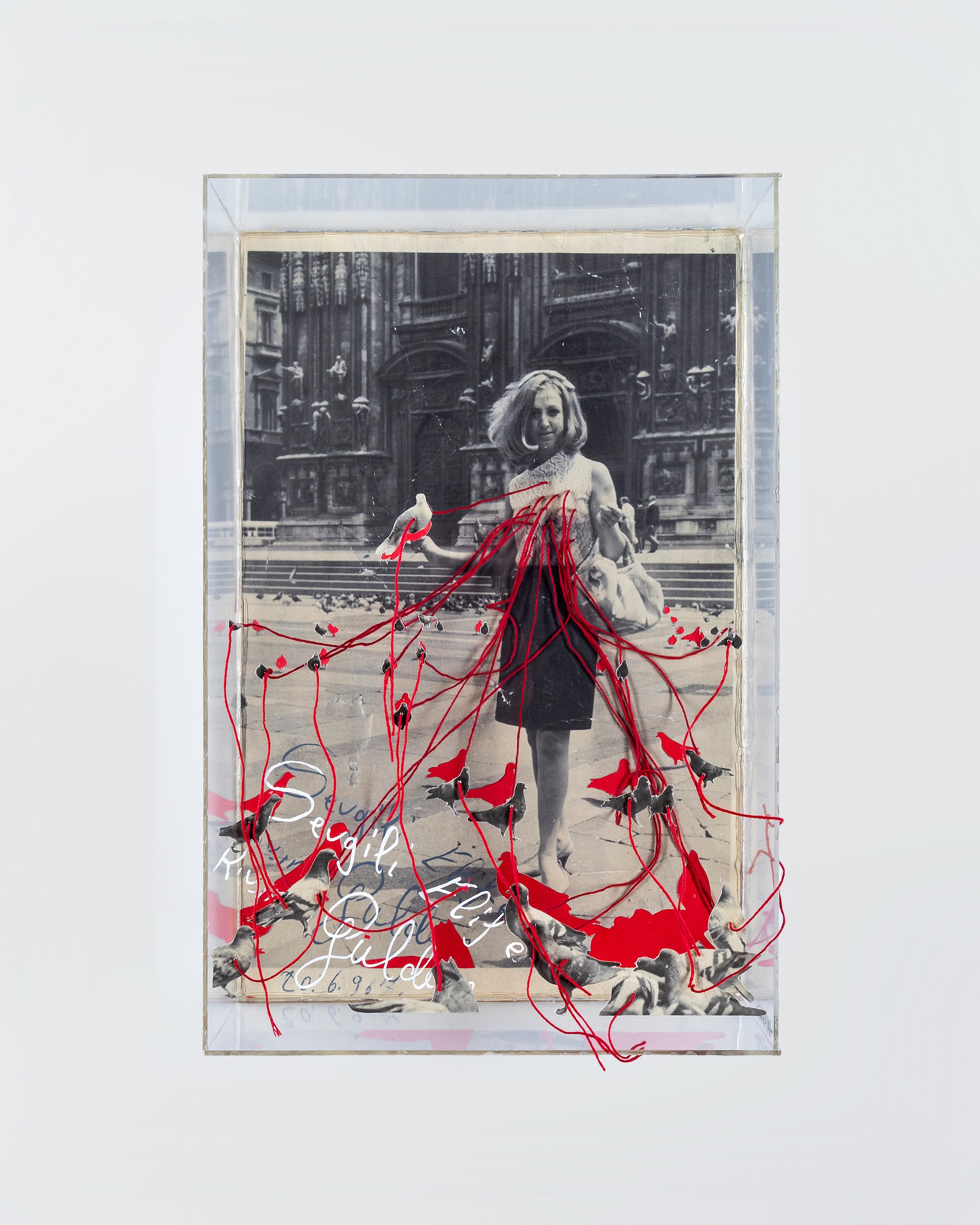
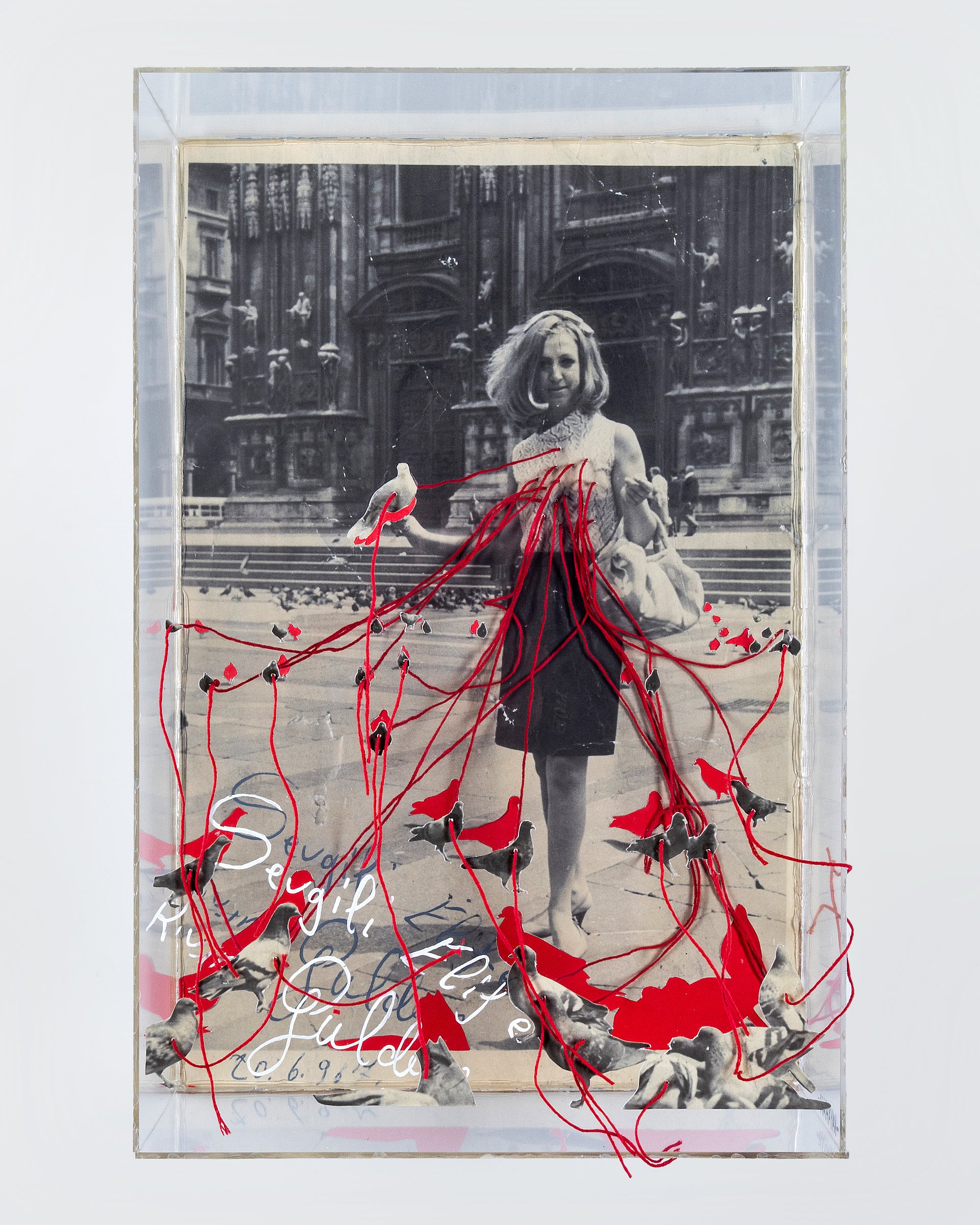
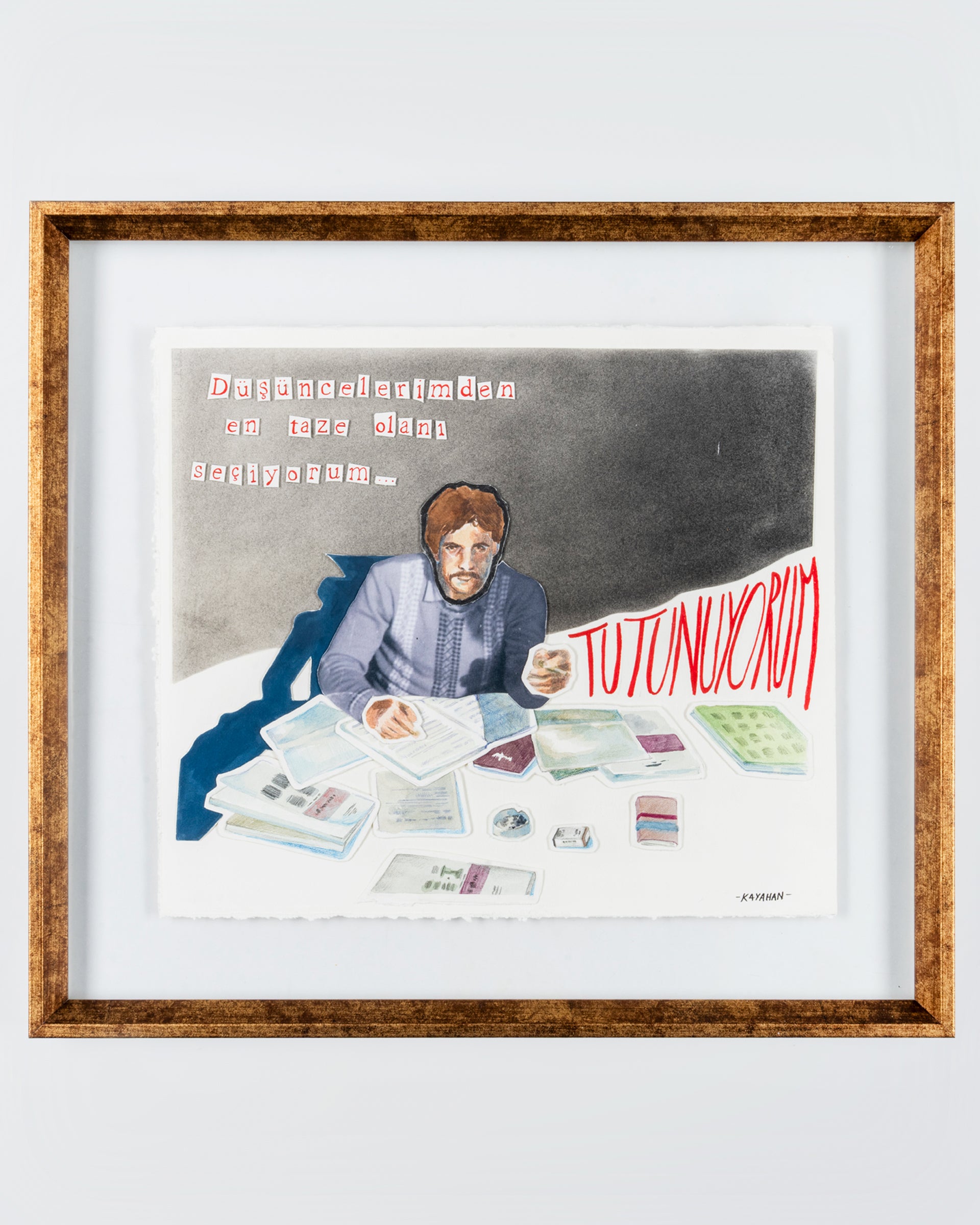
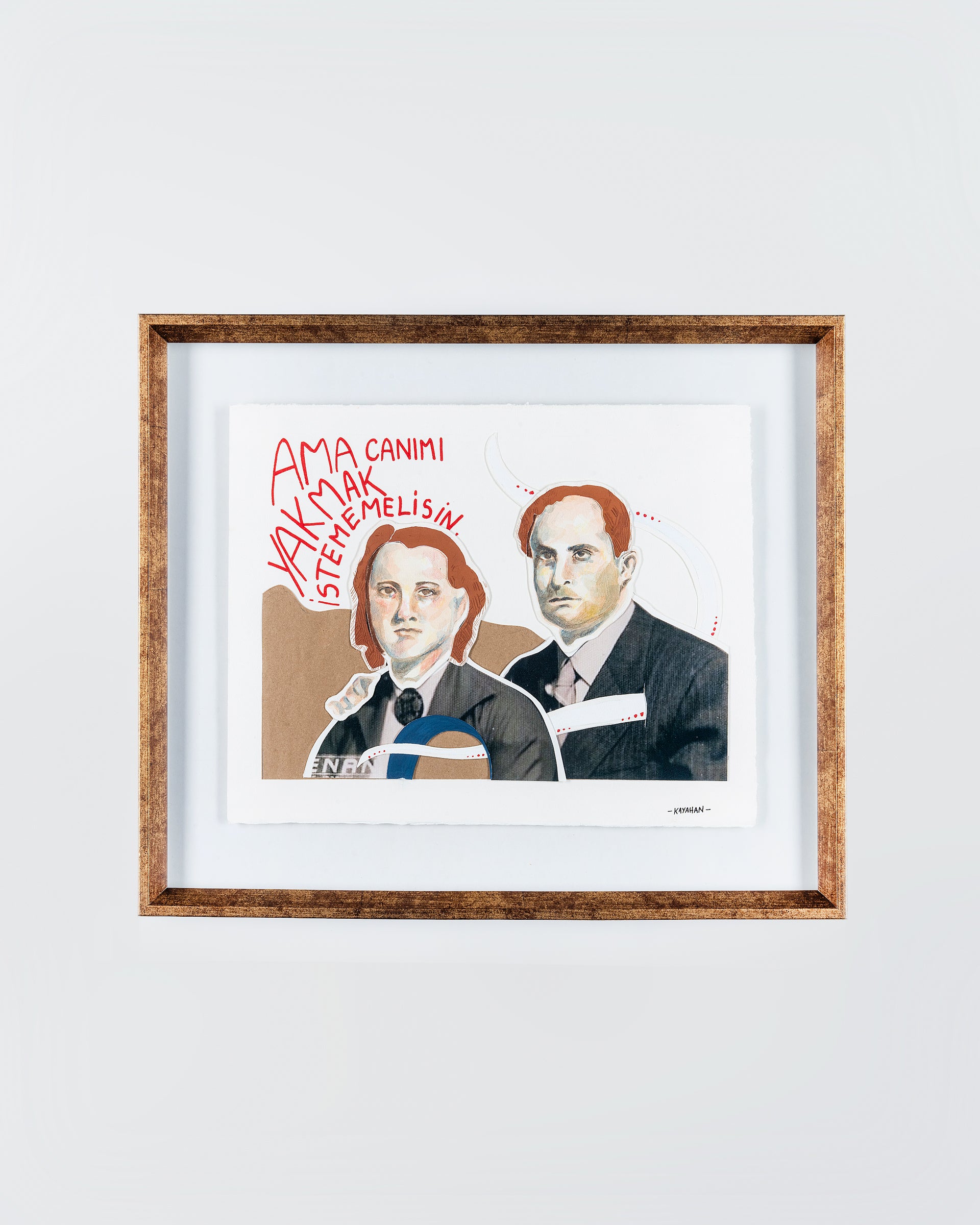
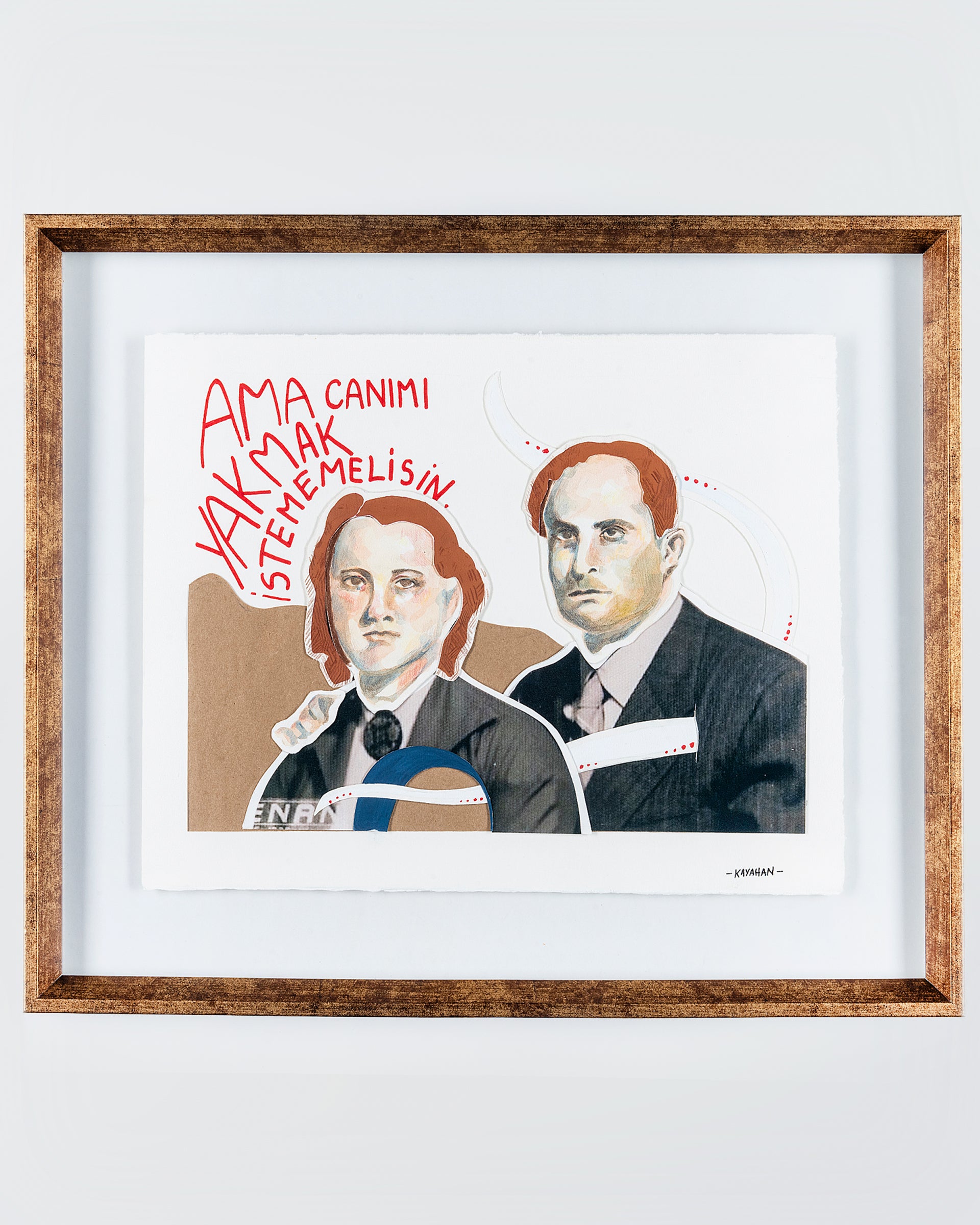
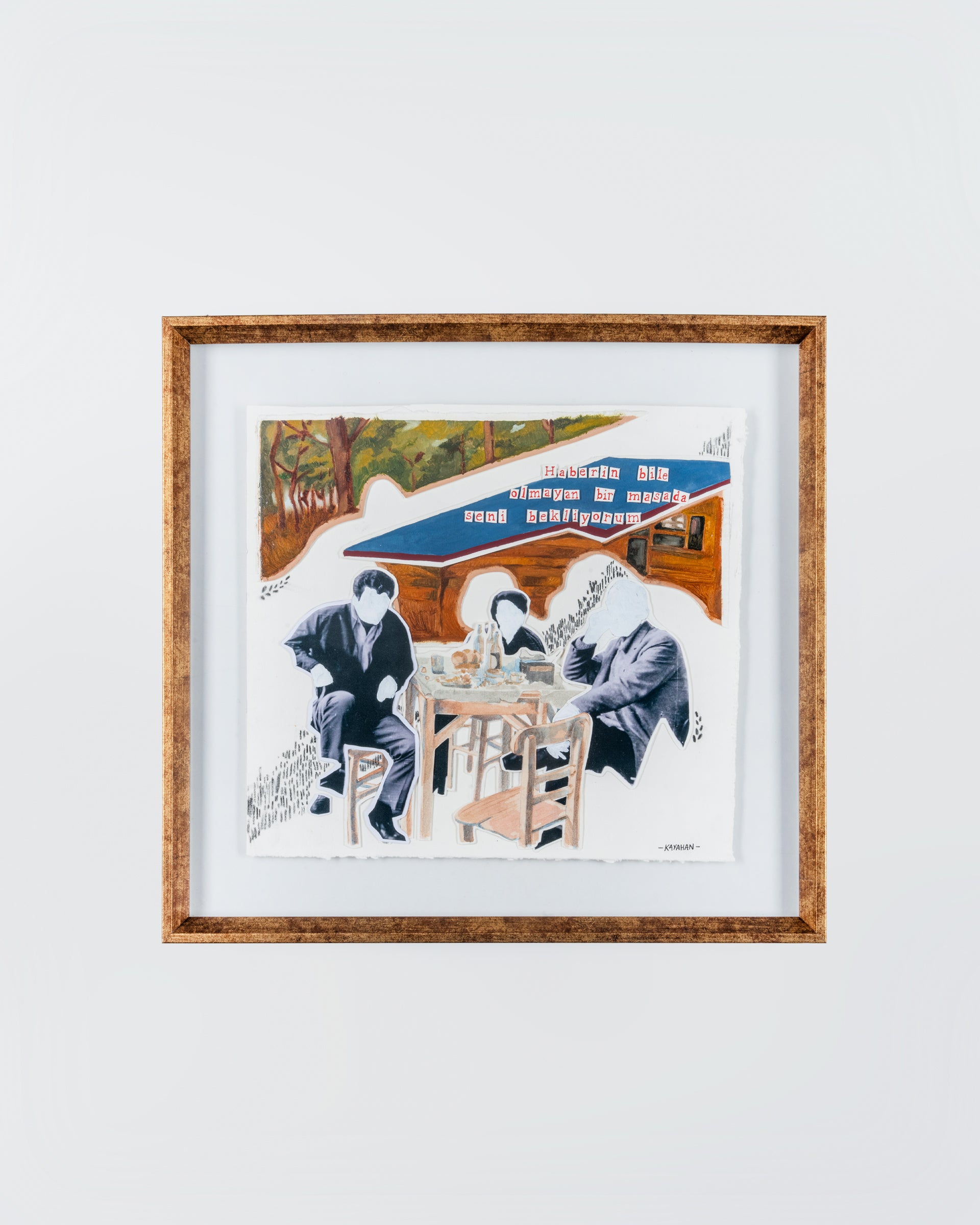
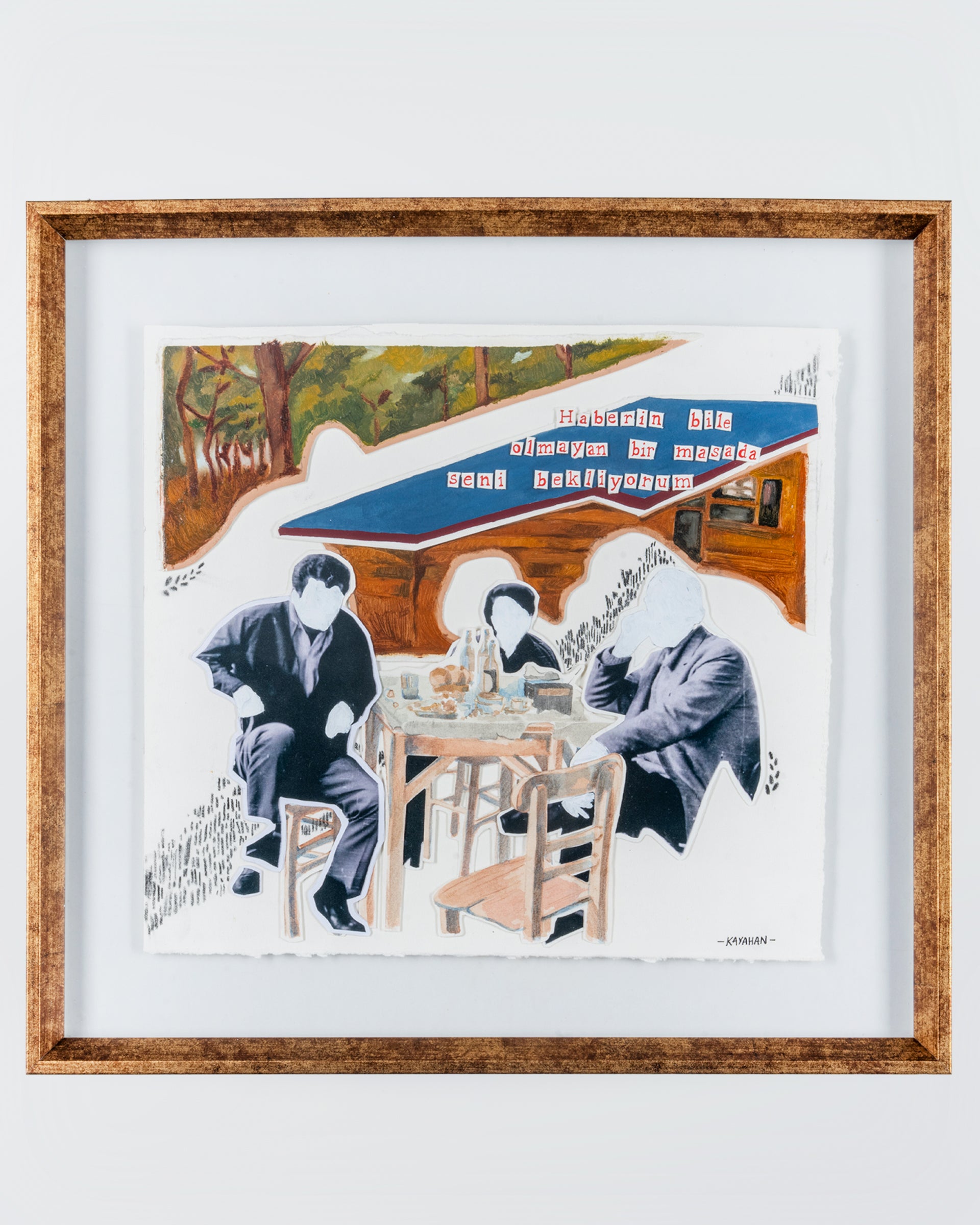
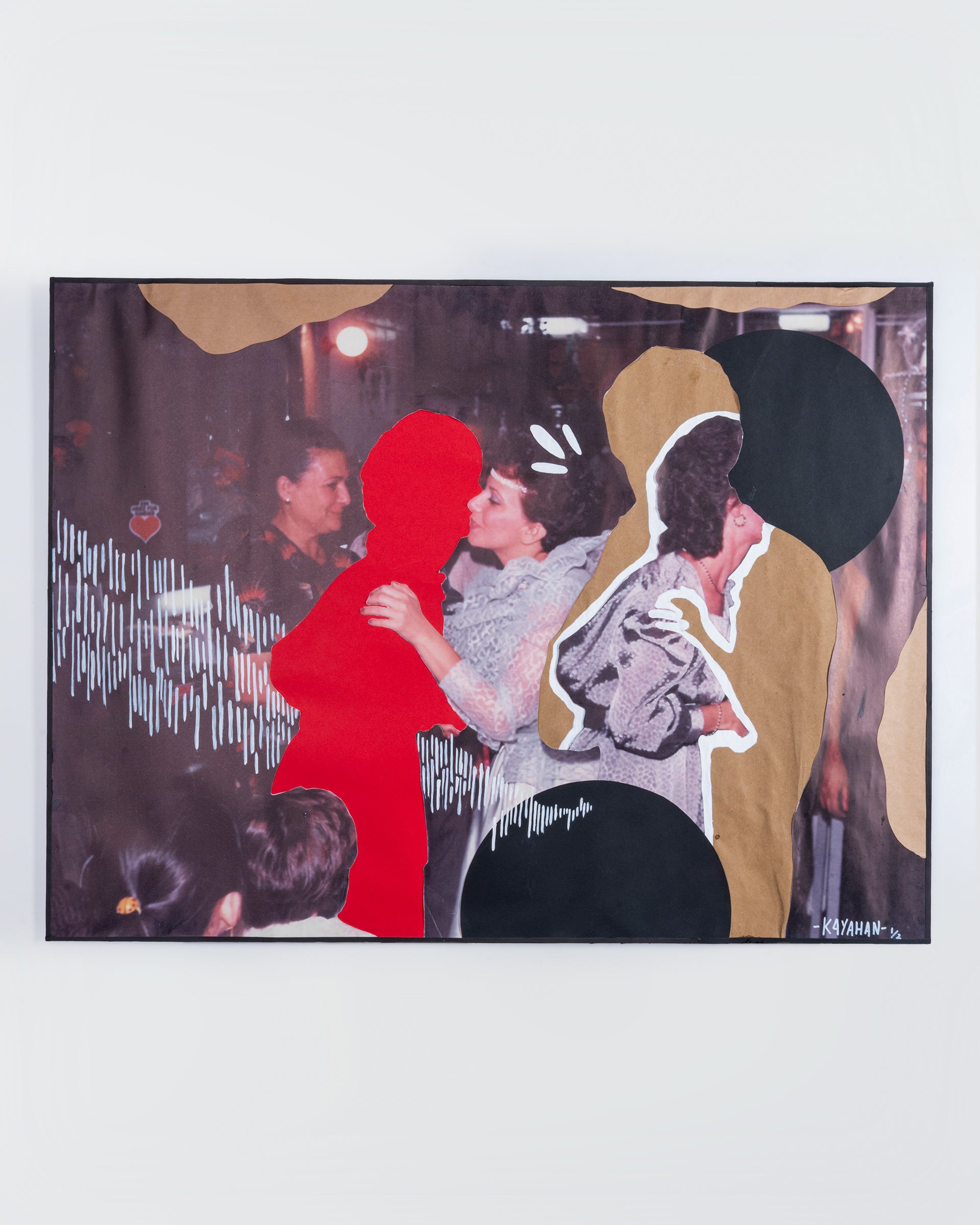
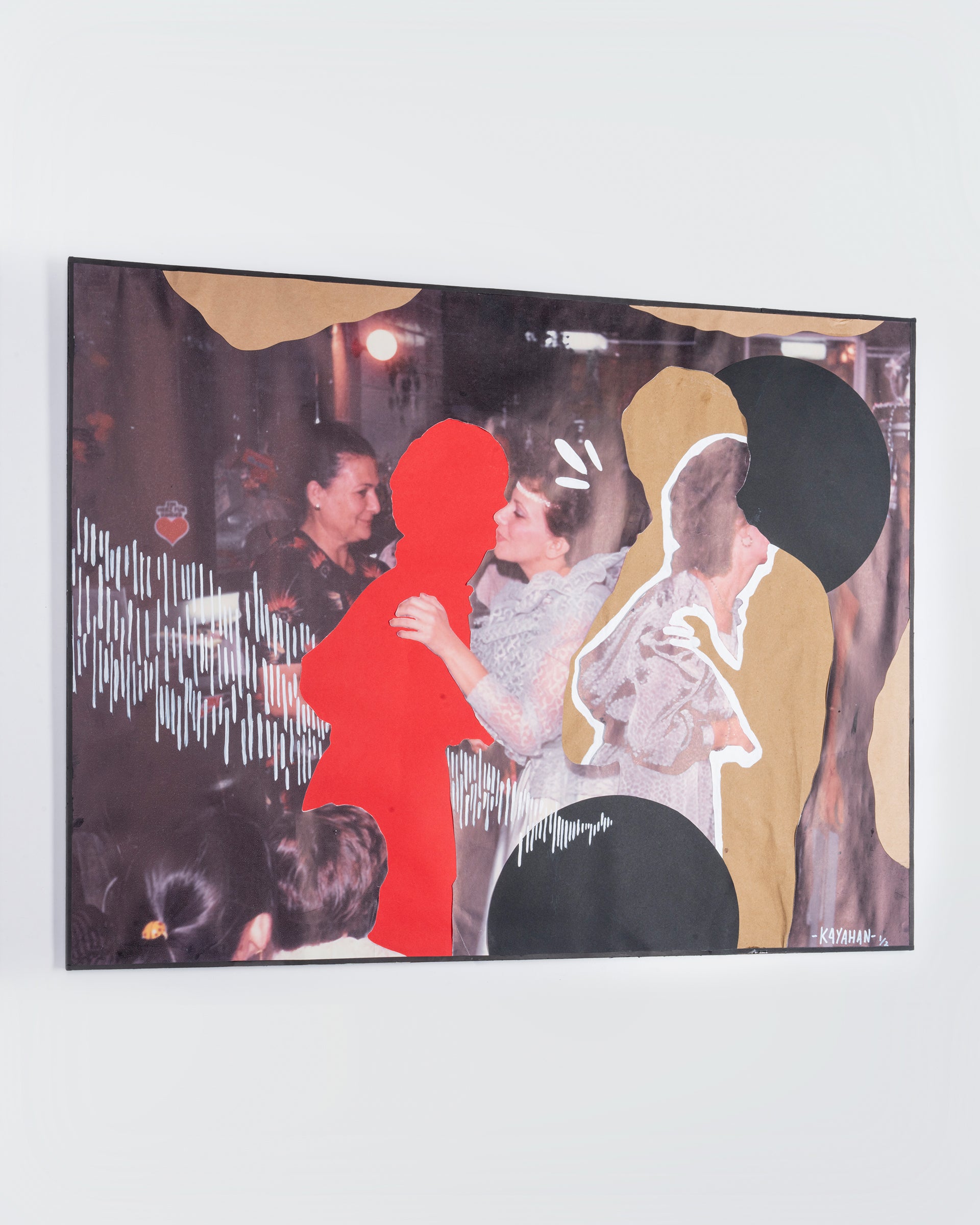
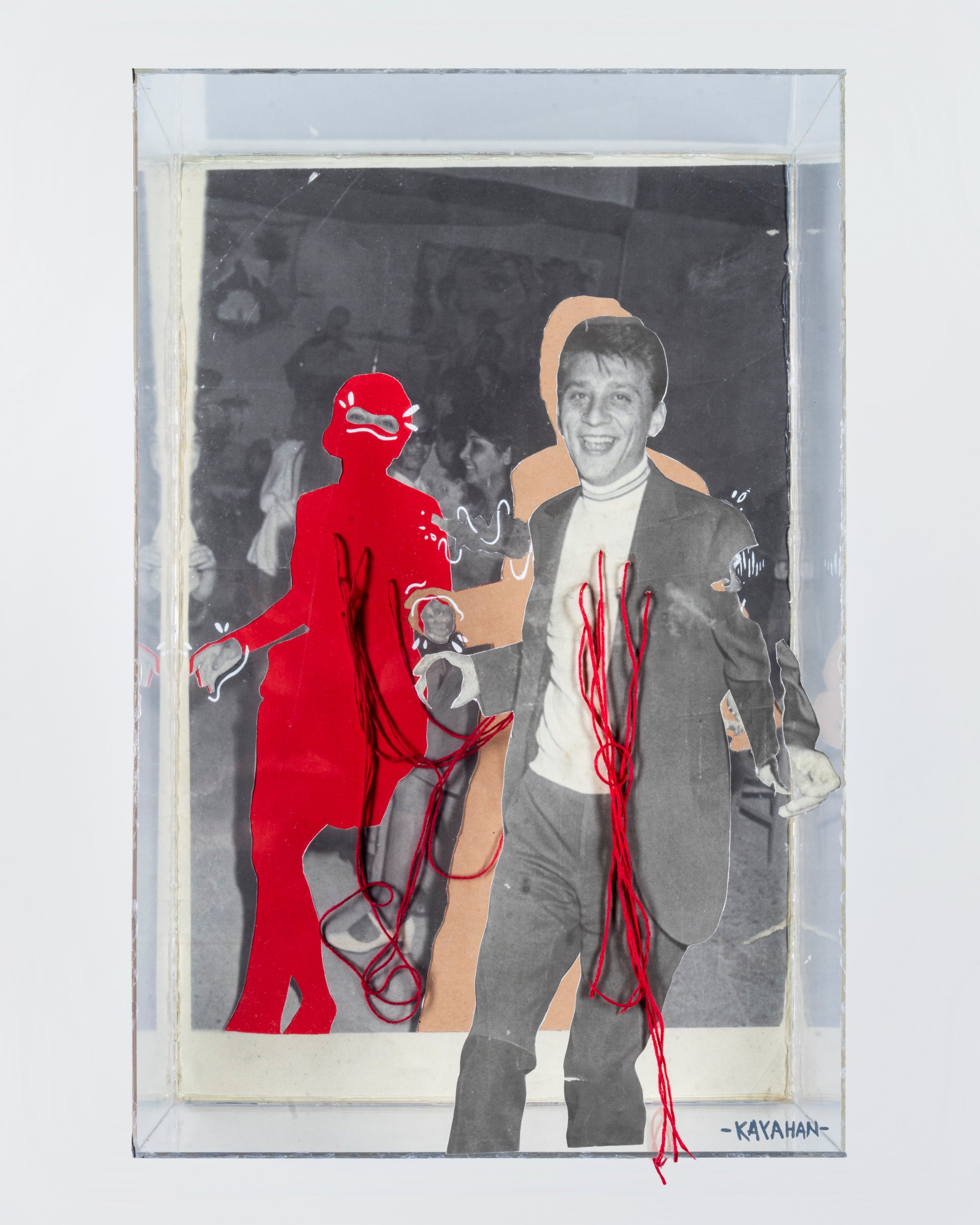
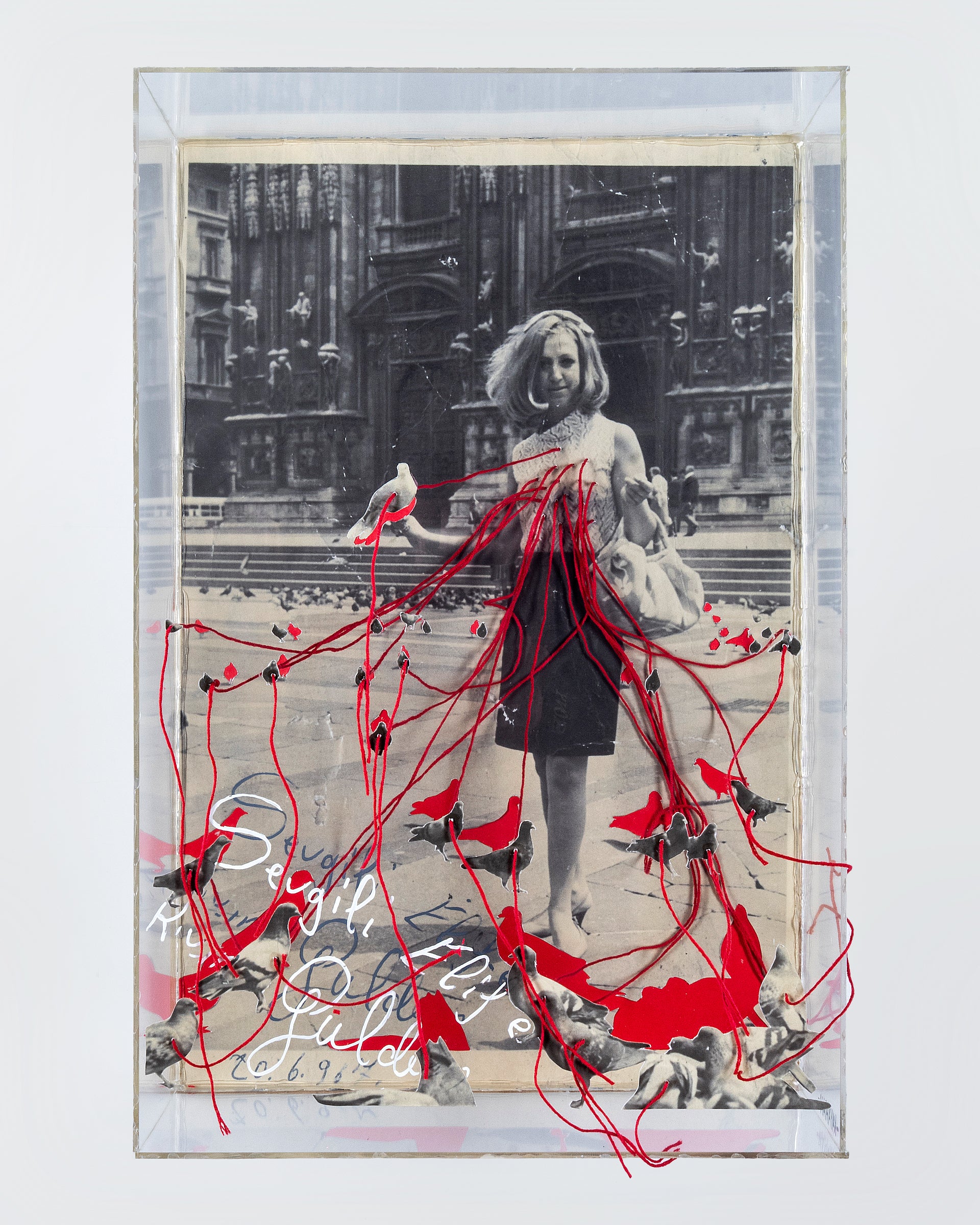
Güliz Kayahan - Sanki Hiç Gitmeyecekmiş Gibi 4
Aidiyet, bağ ve tutulan bir yas üzerine.
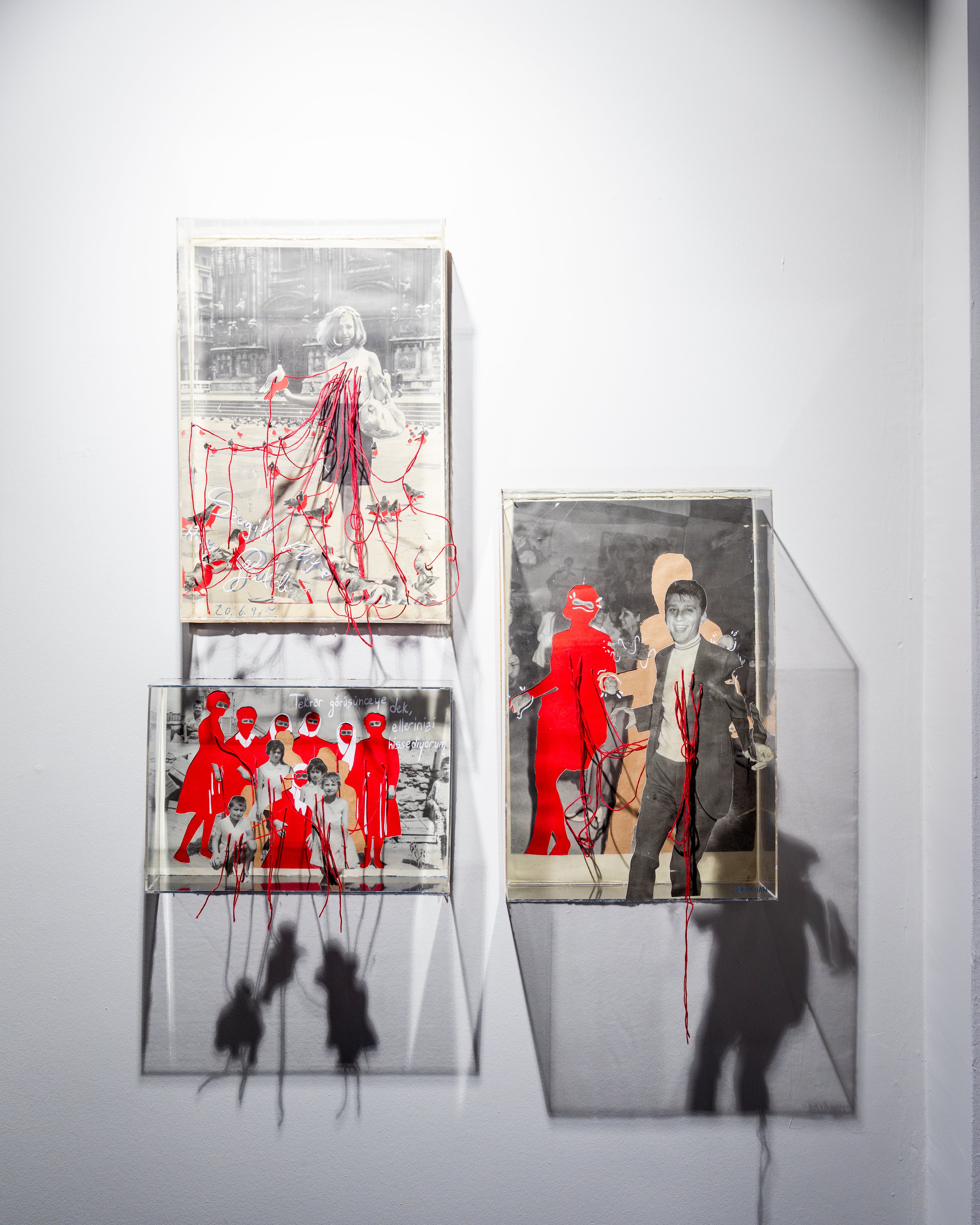
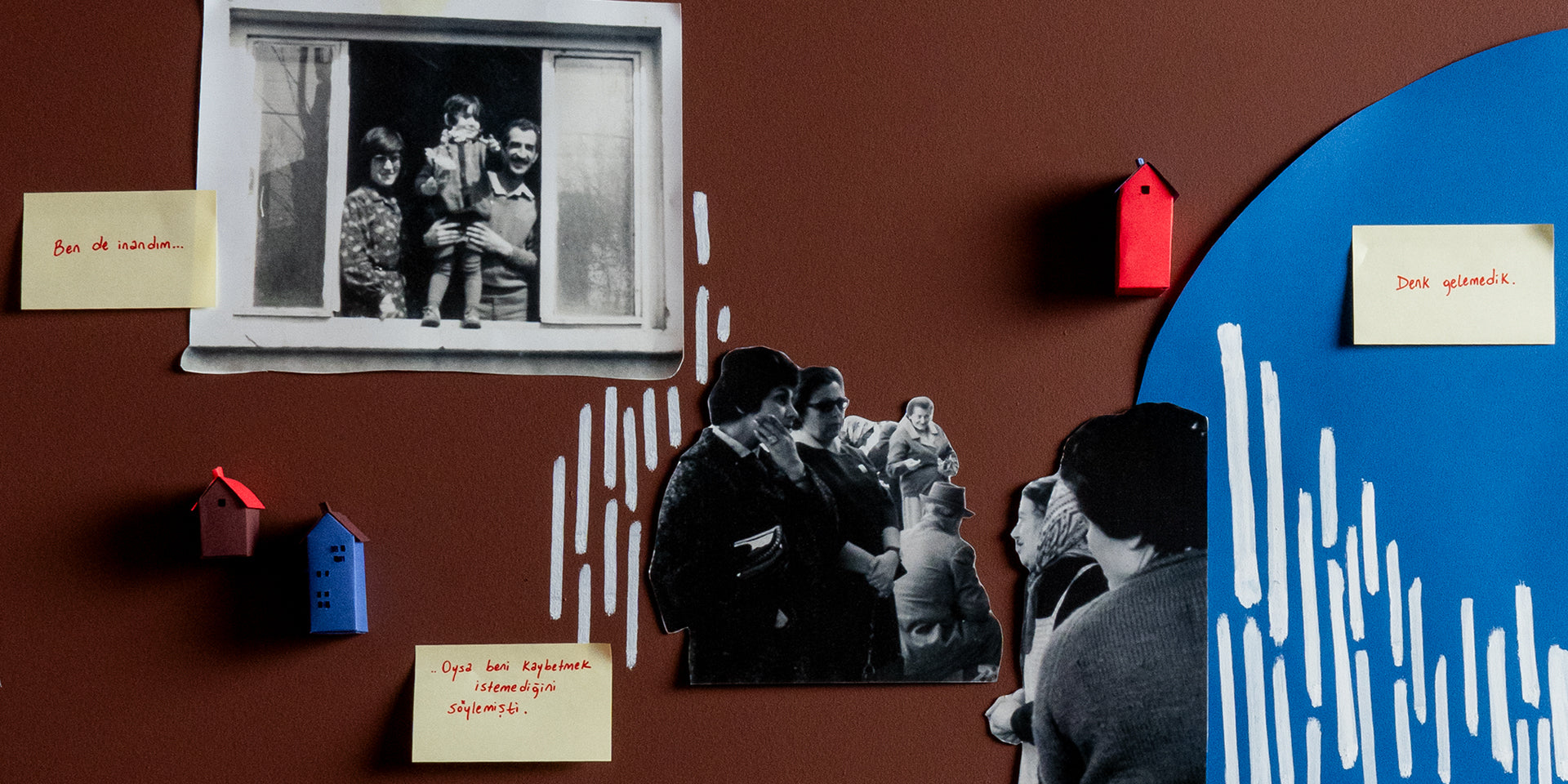
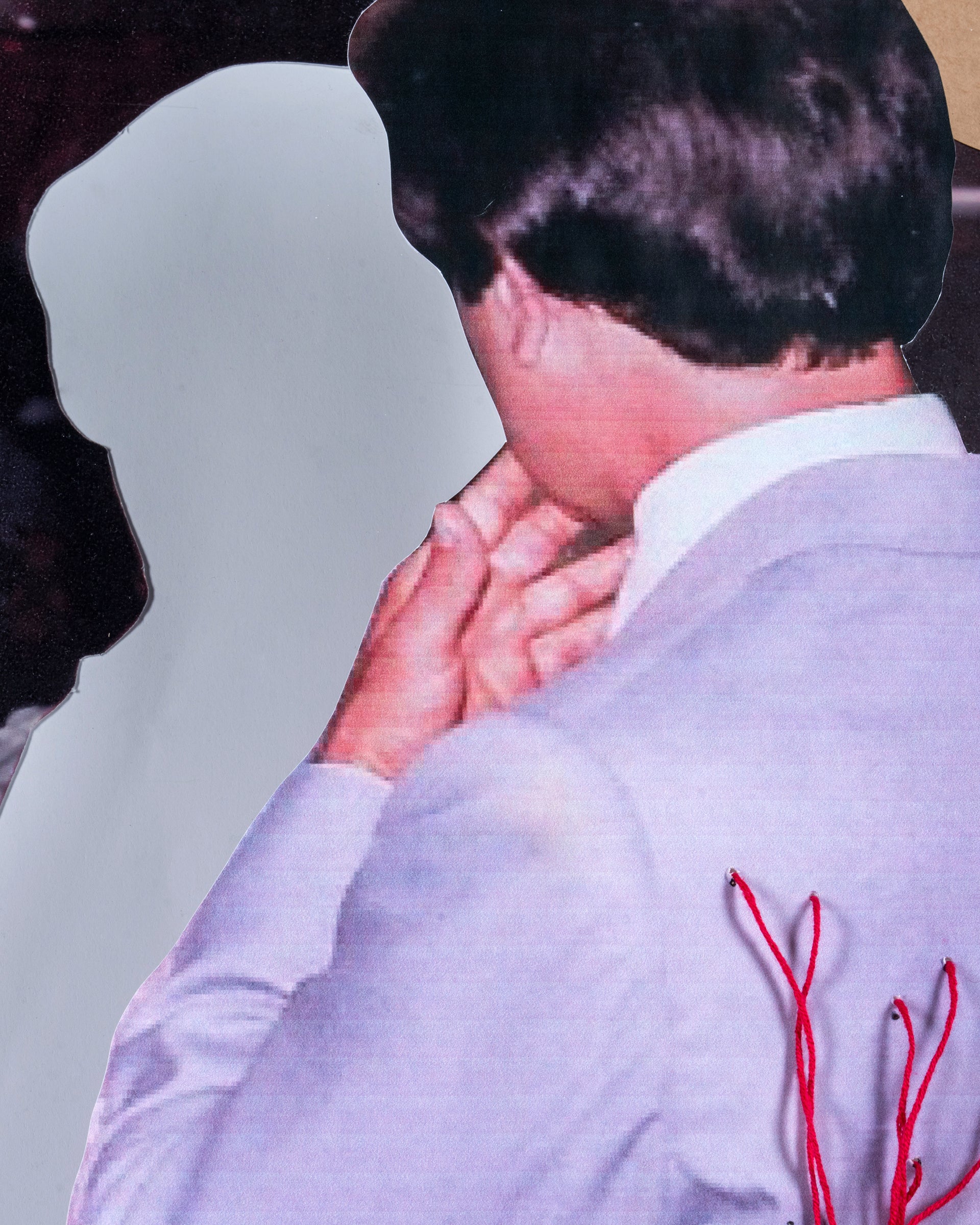
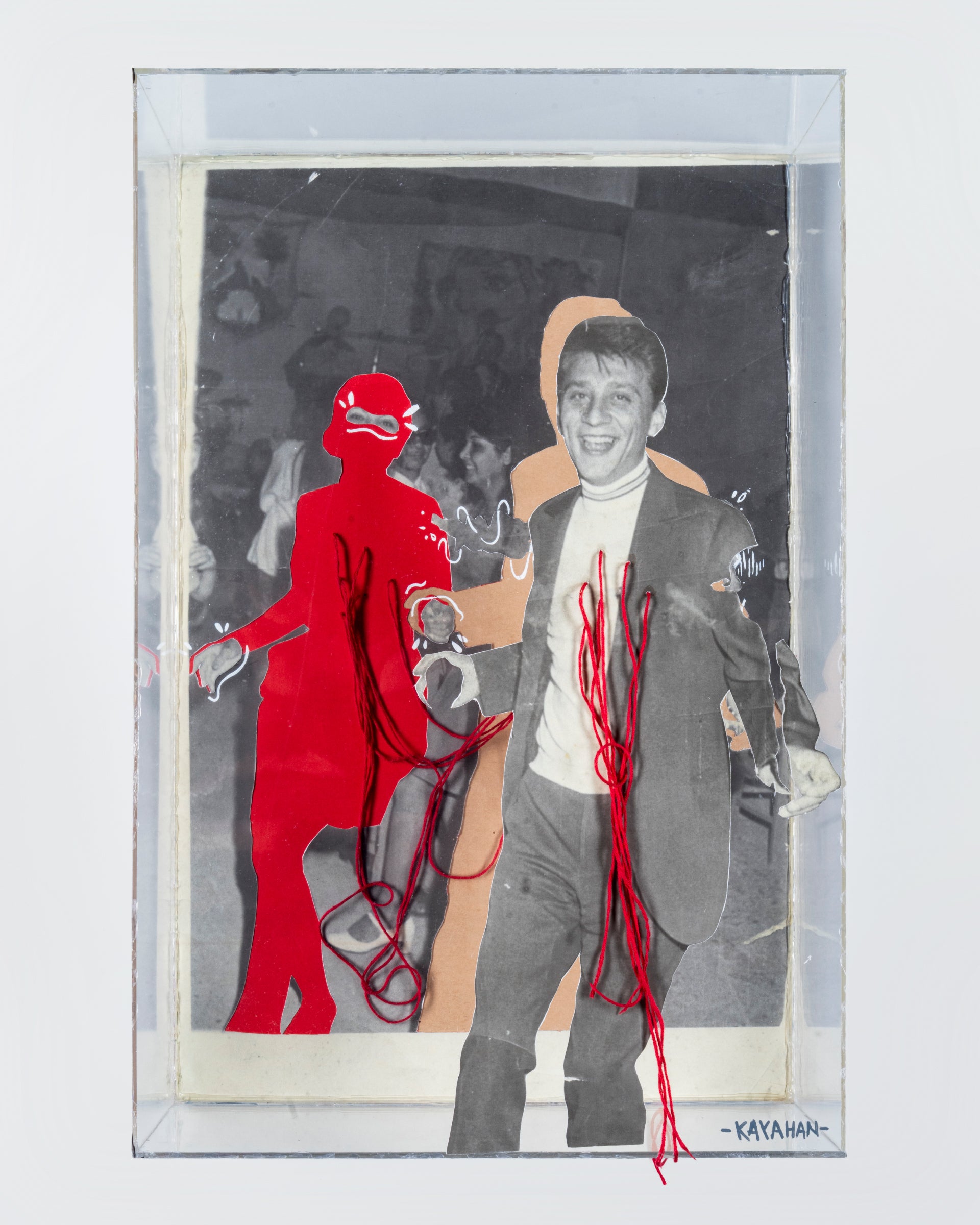
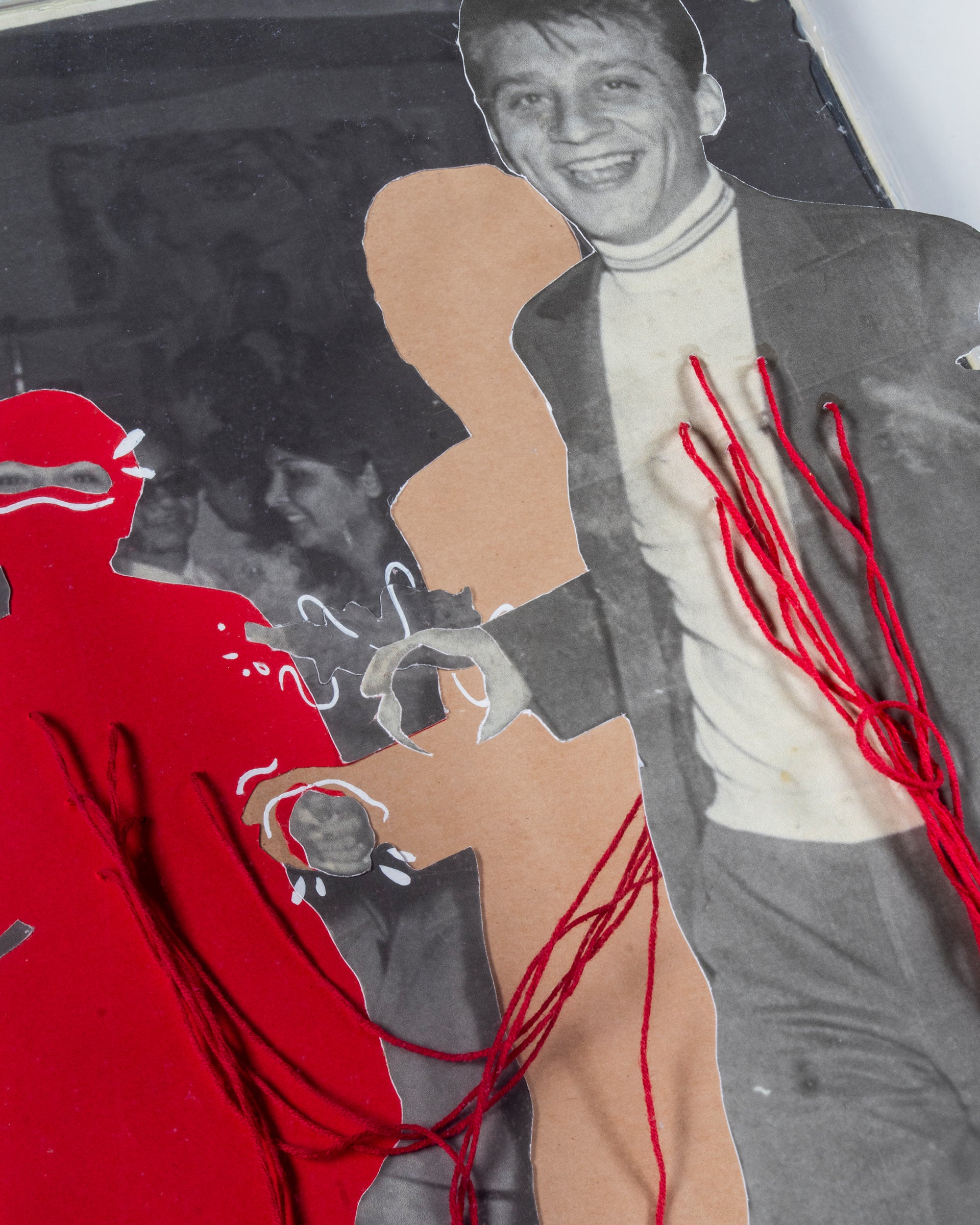
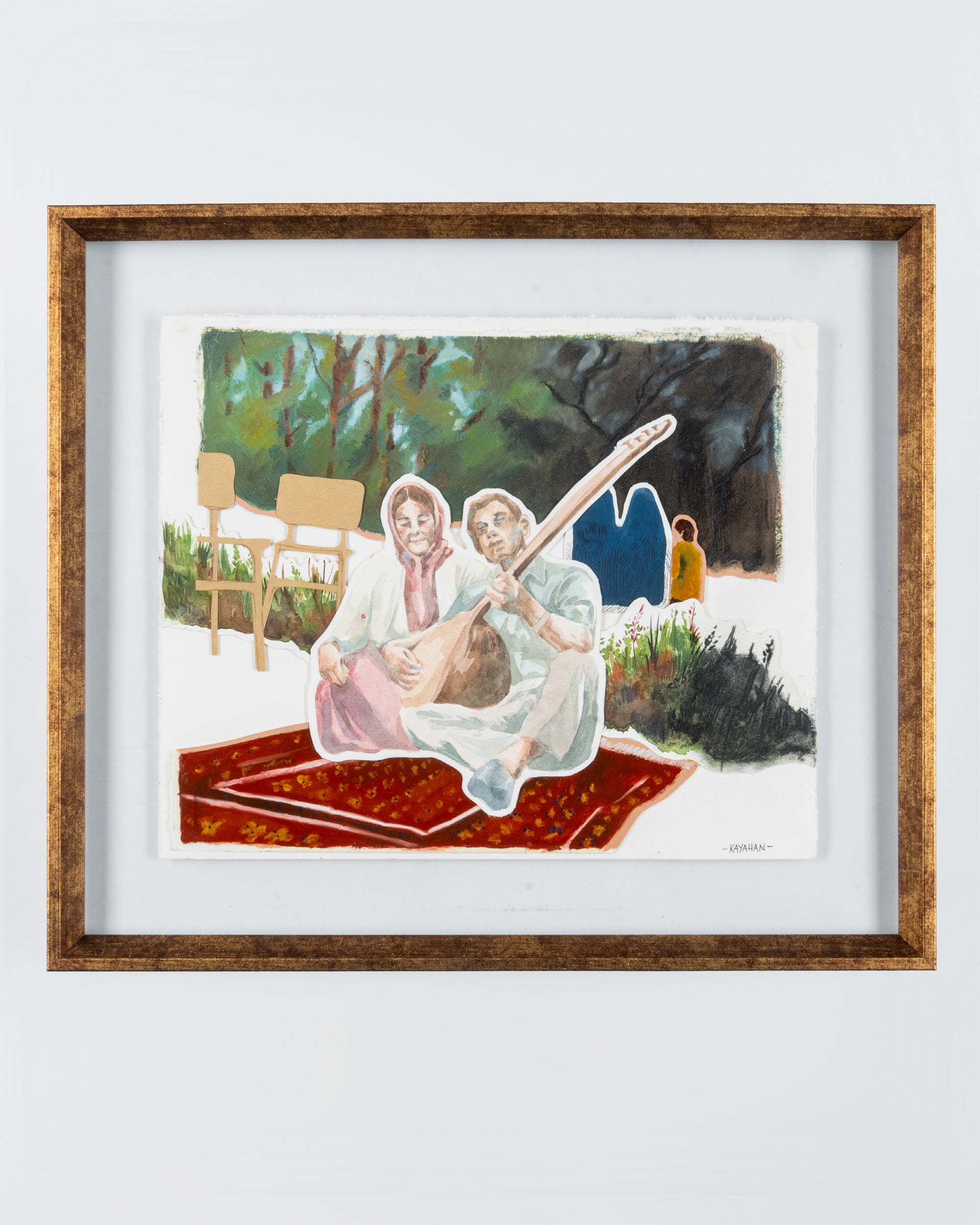
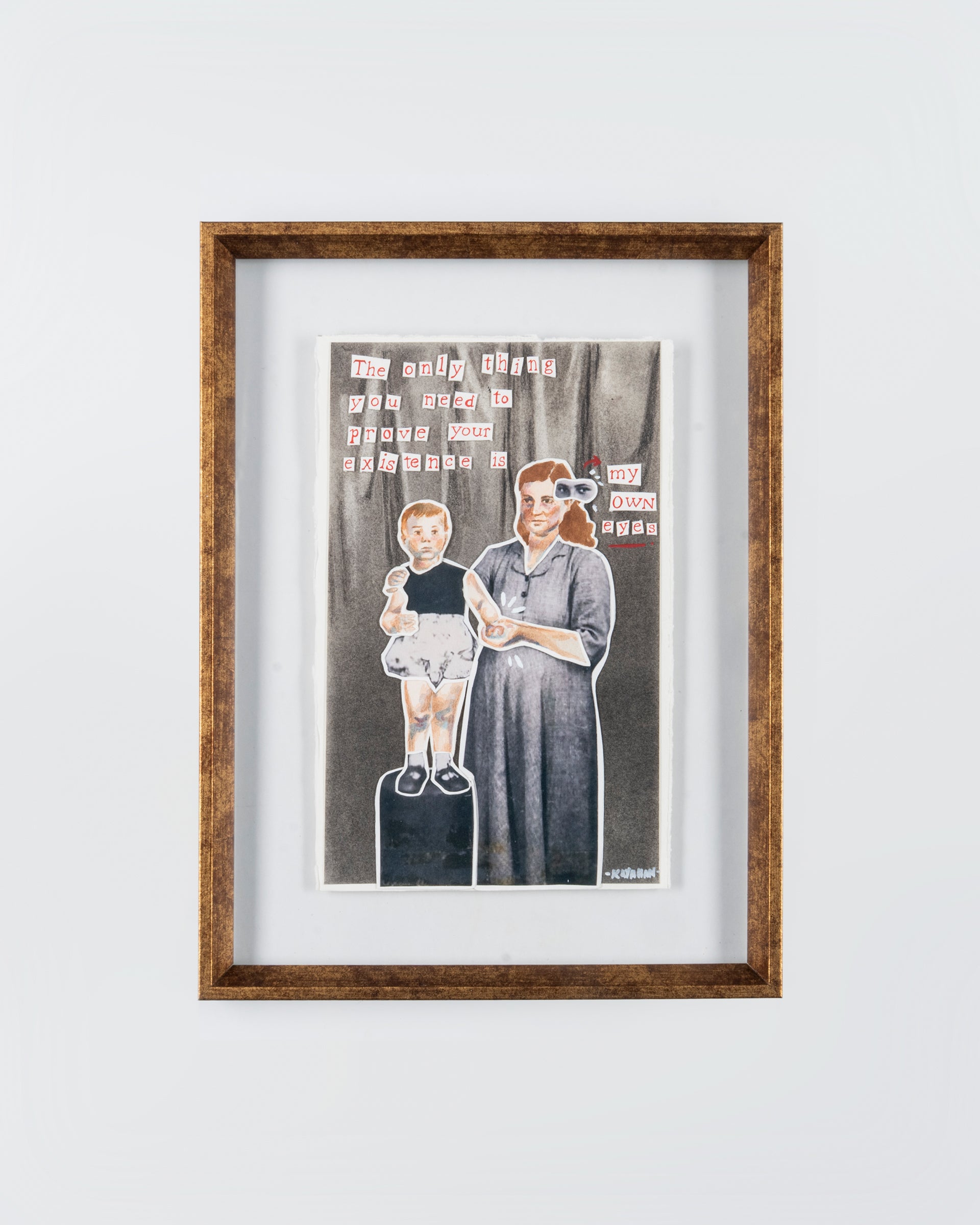
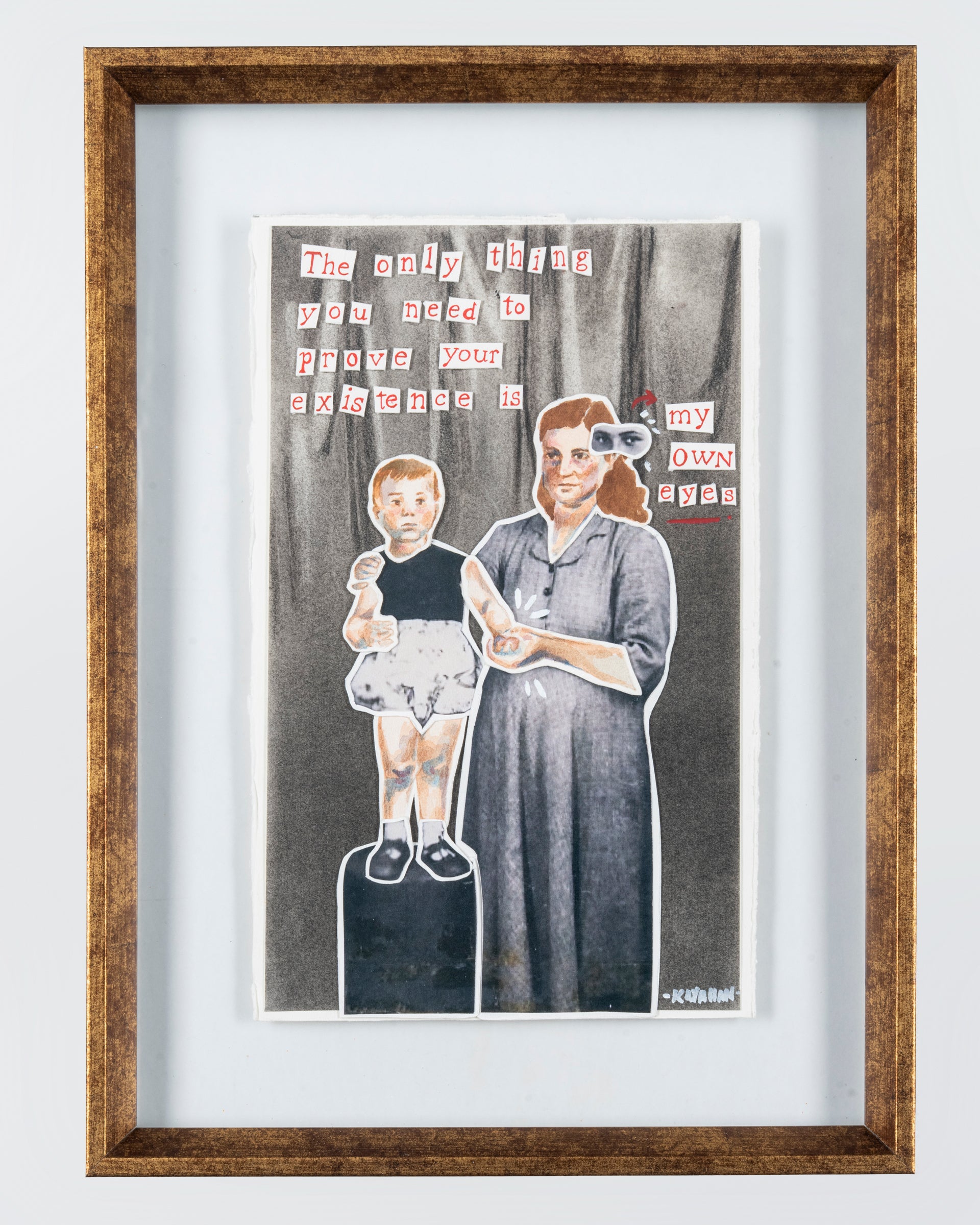
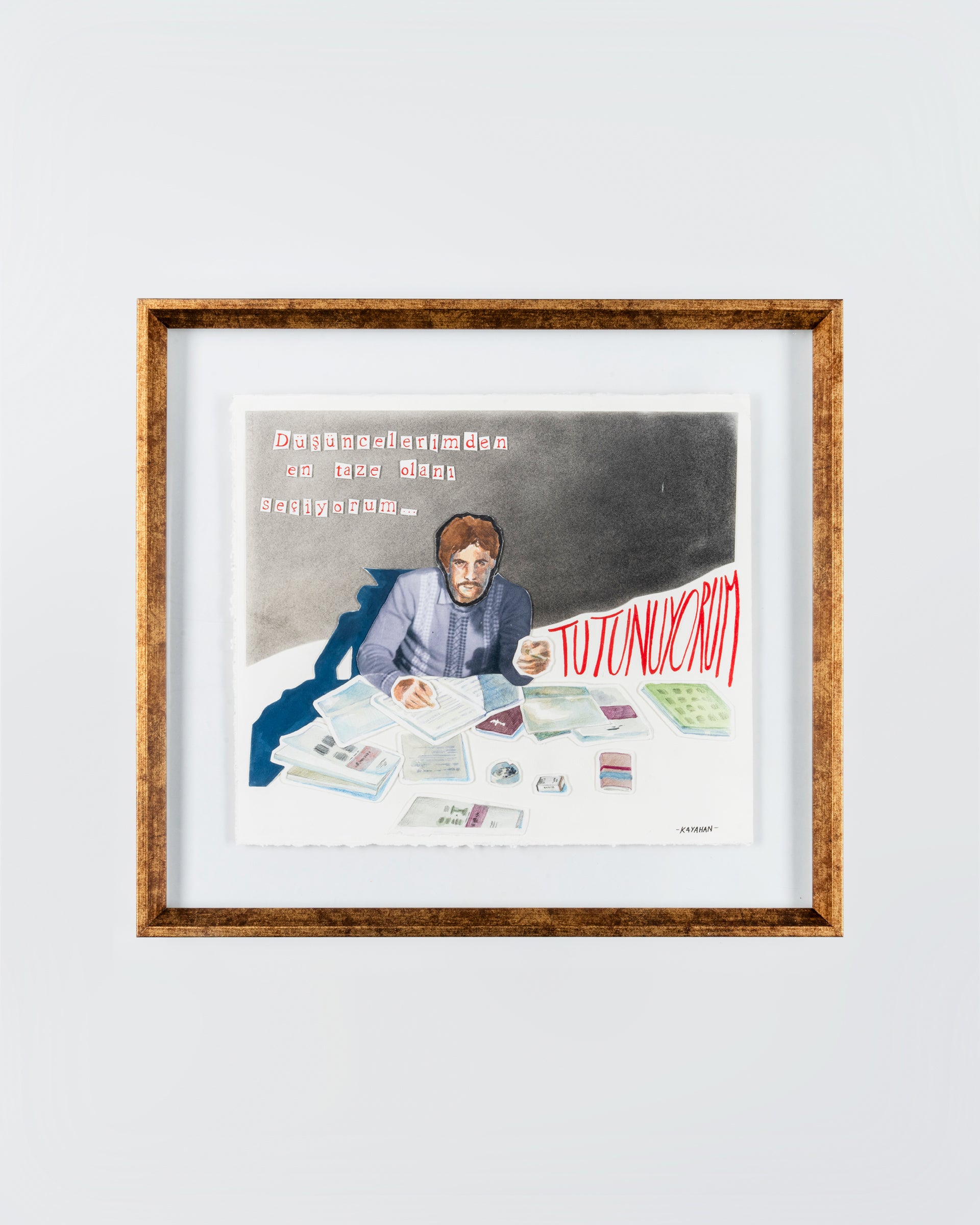
Sahip olduğumuz zaman kavramı “kaybettiklerimizi” de içinde barındırıyor. Olaylar oluyor, insanlar gidiyor, zaman geçiyor ve bizler; spesifik bir zamanda, bir kareye hapsettiğimiz olaylar, ‘anı’ haline geldikten sonra da, o anın içinde kurduğumuz bağları taşımaya devam ediyoruz. Bu çalışmalarda; kullandığım fotoğrafın önce yapısını sonra da iki boyutluluğunu bozarak iki farklı an ve iki farklı duygu kurguluyorum. O anın içinde ‘biriyle’ veya ‘yaşanan olayla’ bütünleşmeyi ve o an geçtikten sonra kurulan duygusal bağı taşımayı anlatıyorum. İzleyenler için: Bağ kurduğumuz ve hayatımızdan giden herkese, izleyenlerin kime ait olduğunu bilmediği bir fotoğraf üzerinden ‘anma’ eylemi gerçekleştiriyorum.
As If They'll Never Leave 4
On Belonging, Connection, and Mourning
The concept of time we hold also encompasses what we've lost. Events happen, people leave, time passes, and even after moments become memories, we continue to carry the connections we formed within those specific moments, trapped in a frame. In this work, by first disrupting the structure and then the two-dimensionality of the photograph I use, I construct two different moments and two different emotions. I depict the act of becoming one with "someone" or "an event" in that moment, and the emotional bond that endures after the moment has passed. For the viewers: I perform an act of remembrance for everyone we've connected with and lost from our lives, through a photograph whose ownership remains unknown to the audience.
2024
24x36x10 cm
Karışık teknik / Mixed Media
Pickup available at Caferaga mah sevki bey sokak 1B
Usually ready in 2-4 days
Güliz Kayahan - Sanki Hiç Gitmeyecekmiş Gibi 4
Caferaga mah sevki bey sokak 1B
Caferaga mah sevki bey sokak 1B
34710 İstanbul
Türkiye
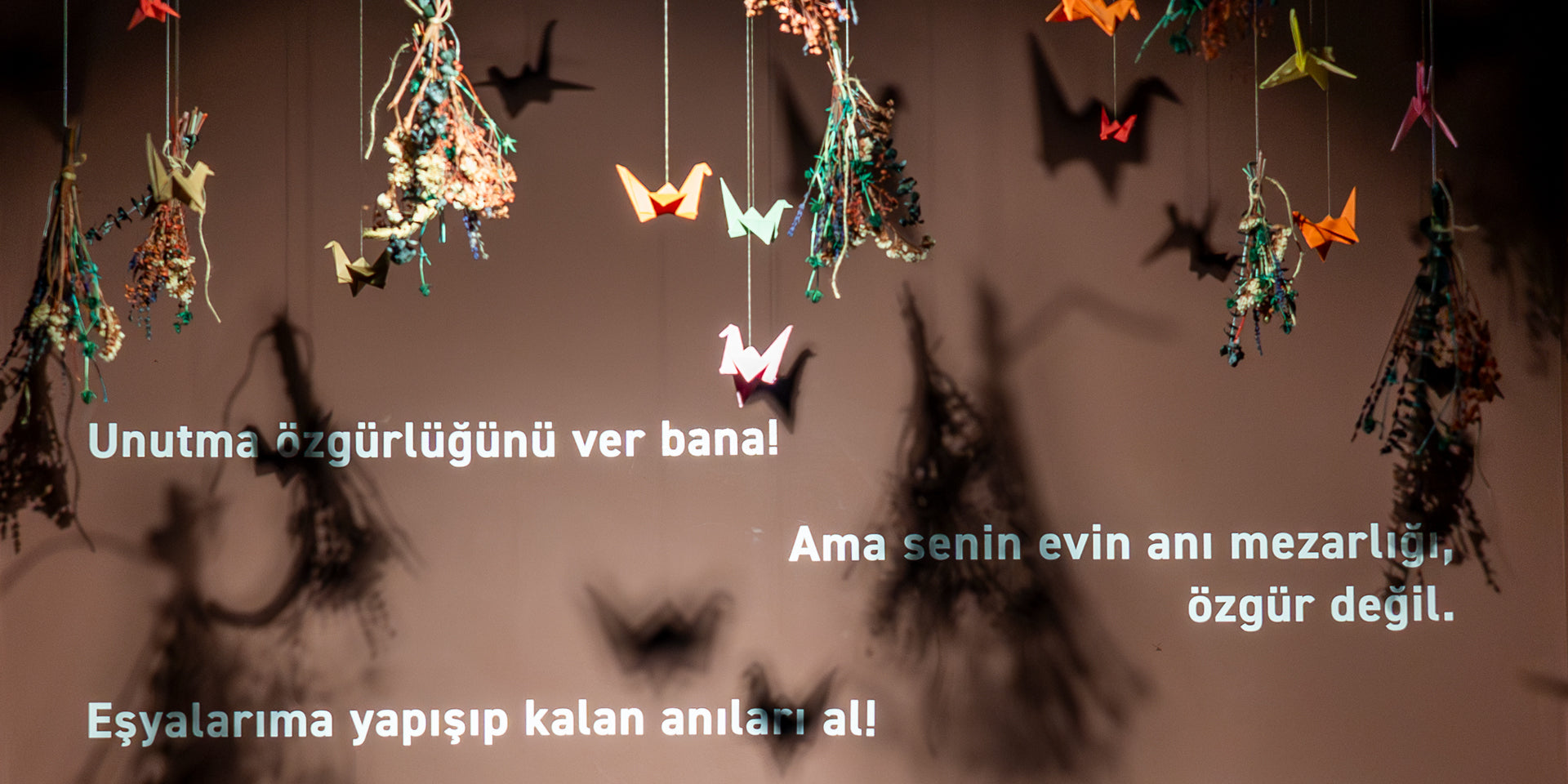


“Hiç Gitmeyecekmiş Gibi”
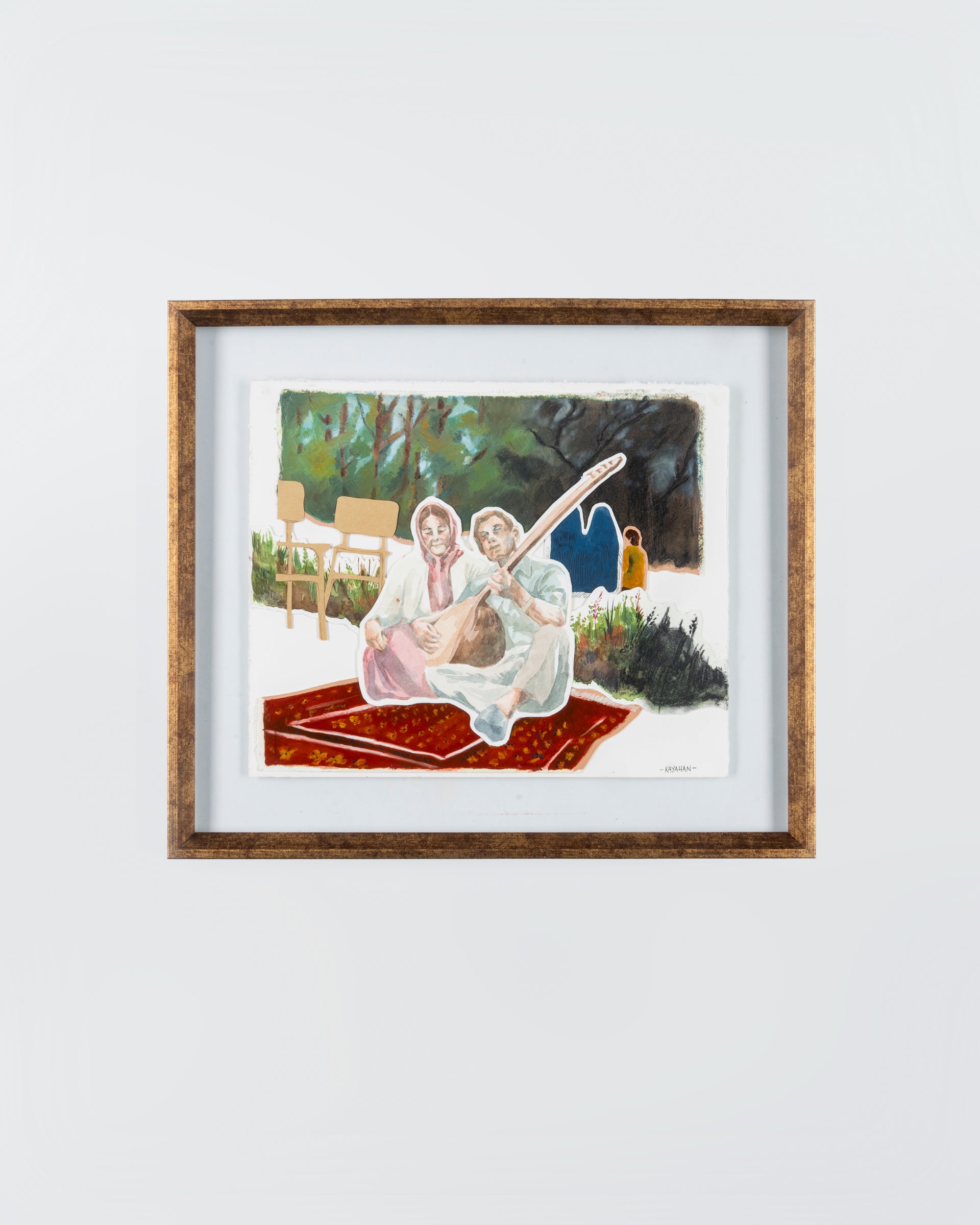
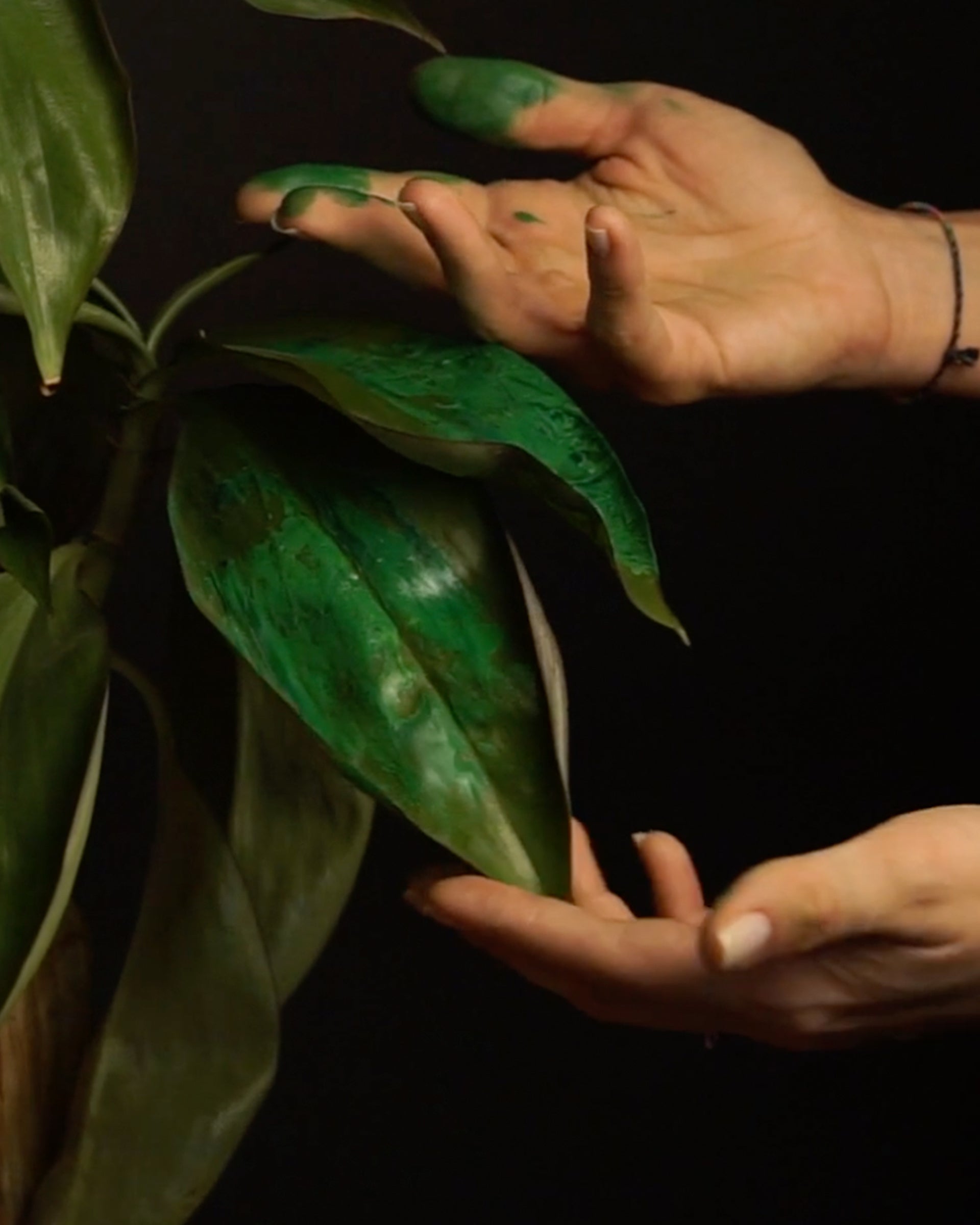
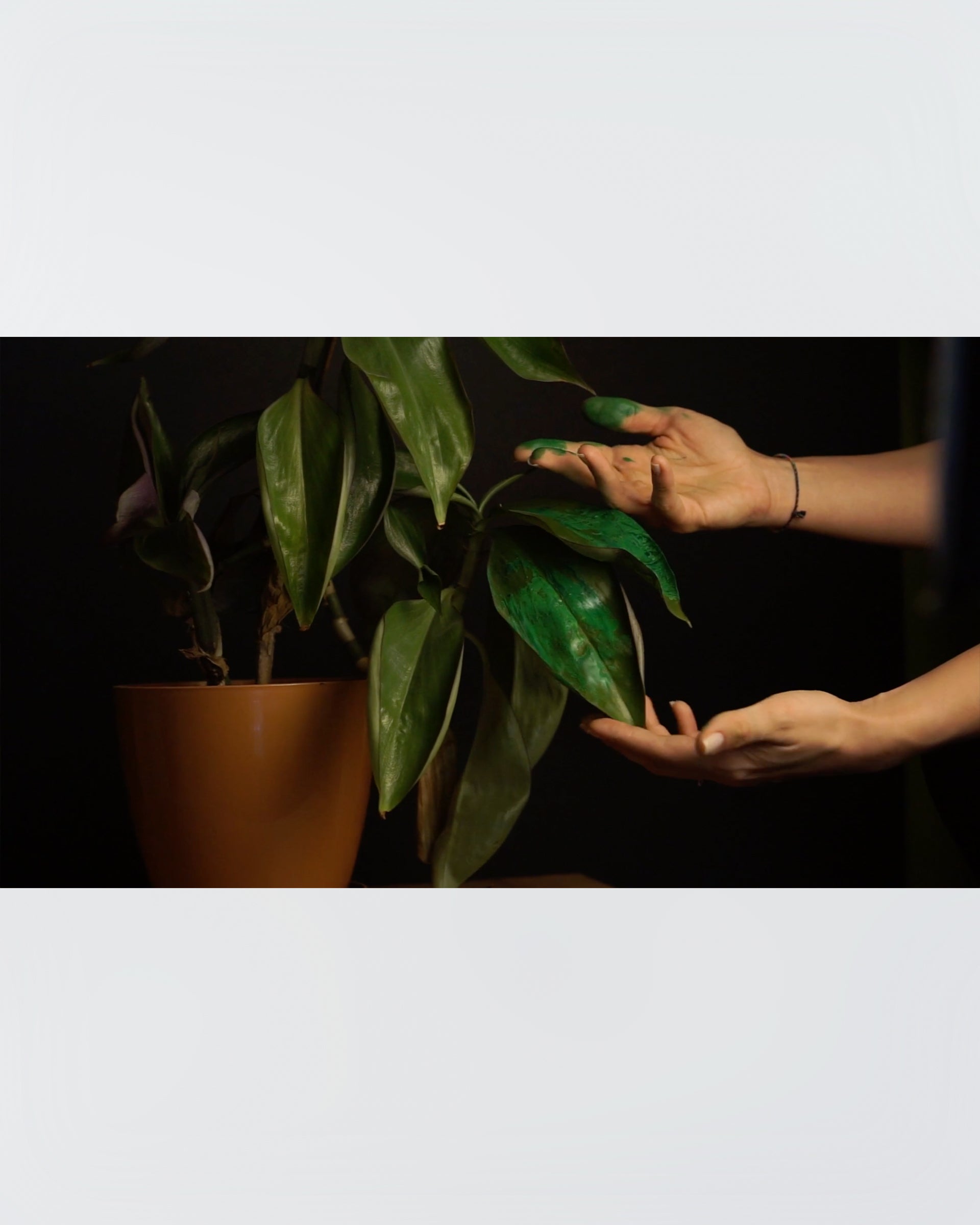
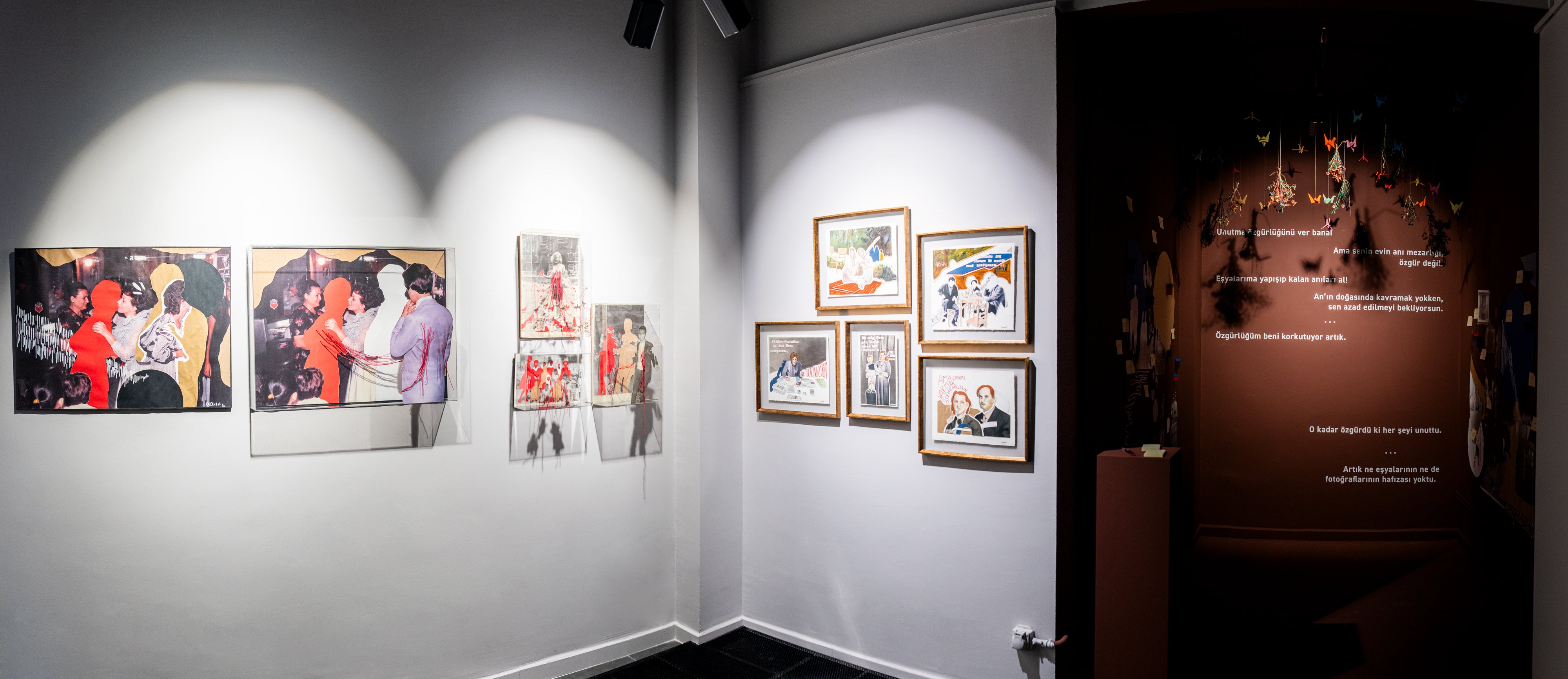
Günler geçiyor ve biz sürekli bir şeyler kaybediyoruz; silinen mesajlar, ölen bir çiçek, kaybettiğimiz eşyalar, unuttuğumuz cümleler… Belki de en güzel güldüğümüz anı, bir daha hiç göremeyeceğimiz biriyle yaşadık ve bunu konuşmuyoruz, farkına bile varmıyoruz. Üstelik artık var olmayan bu geçmiş, bugün kim olduğumuzu belirlemeye devam ediyor.
Hiç Gitmeyecekmiş Gibi, artık var olmayan bir geçmişle kurduğumuz ilişki üzerine düşünmekten doğdu. Geçmiş, kendi başına artık yok; ancak zihnimizde bedenlerimizde ve deneyimlerimizde var olmaya devam ediyor. Geri dönemiyor, yeniden var edemiyoruz, yalnızca yıllar içinde dönüşüp değişen anı parçacıklarıyla ilişkiye geçebiliyoruz.
Aristoteles’in zaman anlayışına göre geçmiş artık yoktur çünkü geçti, gelecek dediğimiz şey de yok çünkü henüz gelmedi. İki var olmayandan bir var olan çıkaramayacağımız için, geçmişin sonu ve geleceğin başı olarak tanımlanan şimdi de yoktur. Zaman, yalnızca devinimin değişme sayısıdır.
Hiç Gitmeyecekmiş Gibi,, zamanı böyle bir yokluk alanı olarak ele alırken, Immanuel Kant’ın zaman ve mekânı birer “görü kalıbı” olarak tanımlayan yaklaşımıyla da hesaplaşır. Kant’a göre insan, dünyayı zamandan ve mekândan bağımsız düşünemez. Bir şeyi hayal ederken, onu mutlaka yere ve bir ana yerleştiririz. Zaman ve mekandan koparılan şey düşüncenin içinde bile varlığını yitirir.
Tam da sorulacak soru şudur: Zaman yalnızca zihinsel bir düzenleme biçimiyse, yaşamın ağırlığının, kaybın ve ölümün neden bu denli etkisinde kalıyoruz? Hiç Gitmeyecekmiş Gibi,, bu soruya bir cevap bulmayı amaçlamaz, sadece bir diyalog alanı kurgular.
“Anlatmak zorundayım, çünkü yaşamış olmakla ne yapacağımı bilemiyorum.” -Clarice Lispector
Sergi Metni
Gizem Kayahan
“As If They’ll Never Leave”
Days pass, and we are constantly losing something; deleted messages, a flower that has withered, objects we have misplaced, sentences we have forgotten… Perhaps the most beautiful laughter we ever shared happened with someone we will never see again. And we do not speak about it, we may not even realize it. Yet this past, which no longer exists, continues to determine who we are today.
As If They’ll Never Leave emerged from reflecting on the connection we build with a past that no longer exists. The past, in itself, is gone; yet it continues to exist within our minds, our bodies, and our experiences. We cannot return to it, nor can we recreate it. We can only engage with fragments of memory that transform and shift over the years.
According to Aristotle’s understanding of time, the past no longer exists because it has passed, and what we call the future does not exist because it has not yet arrived. Since we can not derive something that exists from two things that do not, the present (defined as the end of the past and the beginning of the future) also does not truly exist. Time is merely the number of change in motion.
While approaching time as a field of absence, As If They’ll Never Leave also engages with Immanuel Kant’s conception of time and space as “forms of intuition”(Anschauungsform). For Kant, human beings cannot conceive of the world independently of time and space. Whenever we imagine something, we inevitably place it somewhere and at some moment. Detached from time and space, even in thought, things lose their existence.
The essential question then becomes: if time is merely a mental framework, why do we remain so profoundly affected by the weight of life, by loss, and by death? As If They’ll Never Leave does not seek to answer this question; it simply constructs a space for dialogue.
Rather than offering an answer, the exhibition aligns with Clarice Lispector’s meditation in Água Viva, where speaking becomes a necessity in the face of lived experience.
Gizem Kayahan